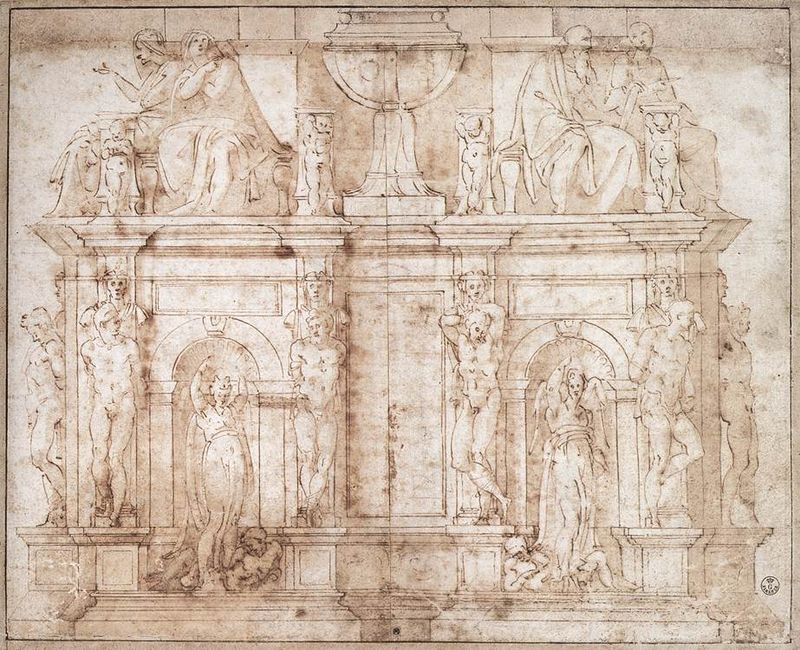
Michelangelo's Tomb for Pope Julius II: Ambitious project, challenges, and enduring legacy in Renaissance art.
Italy
Art Event
4 min read
Updated By: History Editorial Network (HEN)
Published:
Updated:
After Pope Julius II passed away, artist Michelangelo resumed his work on the Pope's tomb. Michelangelo had initially been commissioned to create the tomb several years earlier, during Pope Julius II's life. However, various other projects and conflicts had caused significant delays in the tomb's completion. Upon the Pope's death, the urgency to finalize this major work was renewed.
The original design for the tomb was ambitious, comprising over 40 statues and complex architectural elements. Nonetheless, prolonged interruptions and limitations, including funding issues and changing priorities of the church, required Michelangelo to scale back the original plans. Despite this, the revised design remained a large-scale endeavor which demanded his exceptional sculpting skills.
The undertaking of this project after Pope Julius II's death had a pronounced impact on Michelangelo's work and career. The most famous component of the tomb is the statue of Moses, which stands as a testament to Michelangelo's mastery of sculpture. This statue and the tomb as a whole are considered among his greatest achievements and continue to draw significant acclaim.
The project also reflects the dynamic relationship between artist and patron during the Renaissance. Michelangelo's work on the tomb demonstrates both the challenges faced in completing large commissions and the enduring legacy of Renaissance artistry.
#Michelangelo #RenaissanceArt #PopeJuliusII #Sculpture #HistoricalEvent #MoofLife
Explore the Life Moments of
 AI Twin