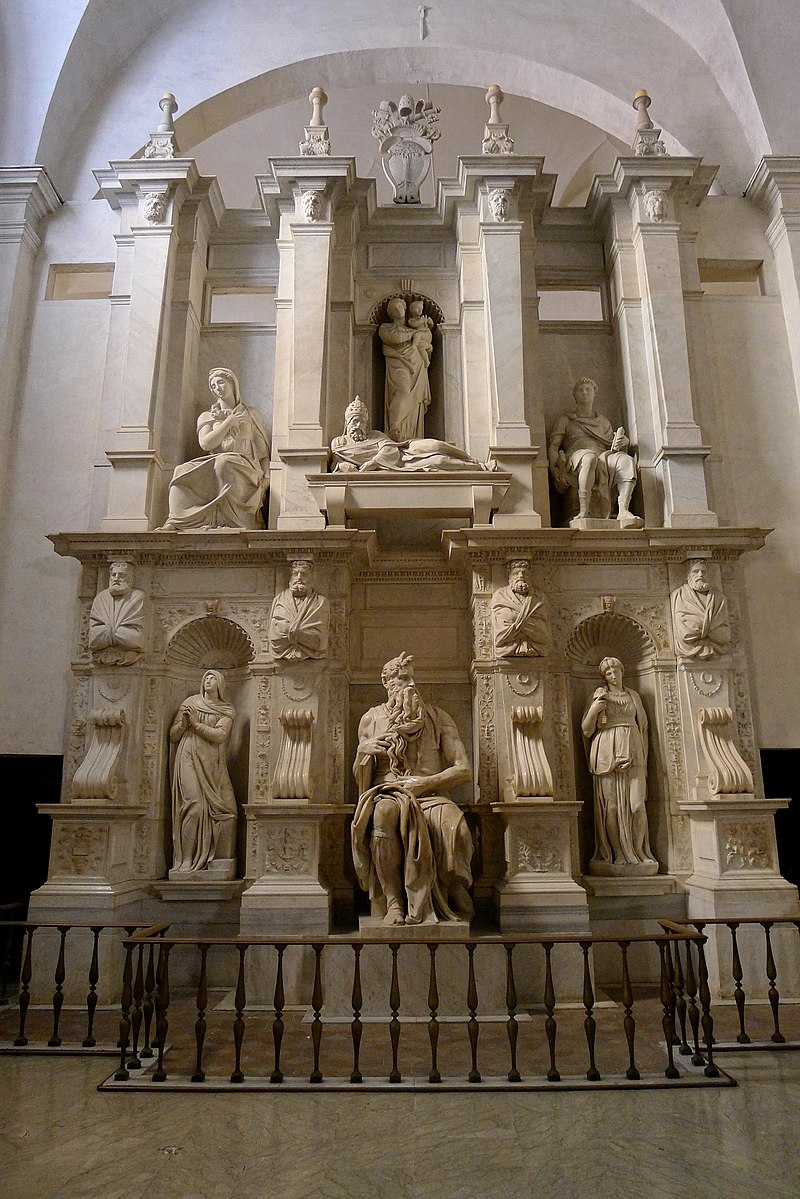
Completion of Pope Julius II's tomb in Rome highlights Michelangelo's resilience and artistic mastery.
Italy
Art
4 min read
Updated By: History Editorial Network (HEN)
Published:
Updated:
The completion and installation of the tomb of Pope Julius II in San Pietro in Vincoli, Rome, marked the culmination of a project that spanned decades and saw numerous challenges. Commissioned by Pope Julius II himself, the tomb was intended to be a grand monument. The renowned artist Michelangelo Buonarroti was entrusted with the design and execution of the tomb.
Initially, Michelangelo had envisioned an elaborate structure with over 40 statues. However, due to various interruptions, including the artist's other commissions like the Sistine Chapel ceiling, the final structure was considerably scaled-down. The project faced delays due to the shifting priorities of the church and changes in papal leadership, causing frustration for the artist and patrons alike.
Despite these setbacks, the final tomb, completed and installed in the church of San Pietro in Vincoli, remains an iconic masterpiece. Michelangelo's famous statue of Moses, a central figure in the tomb, exemplifies his skill in sculpting and his ability to convey emotion and physical power. The monument also features other statues, including what was completed by his assistants, yet the overall artistic harmony reflects Michelangelo's vision and design principles.
The impact of the tomb's completion reverberated through the art world, solidifying Michelangelo's reputation as a master sculptor. The tomb stands as a testament to the resilience and determination of the artist, who overcame substantial obstacles to complete this significant commission.
Relevant hashtags include:
#TombOfPopeJuliusII #Michelangelo #RenaissanceArt #SanPietroInVincoli #ArtHistory #MoofLife
Explore the Life Moments of
 AI Twin