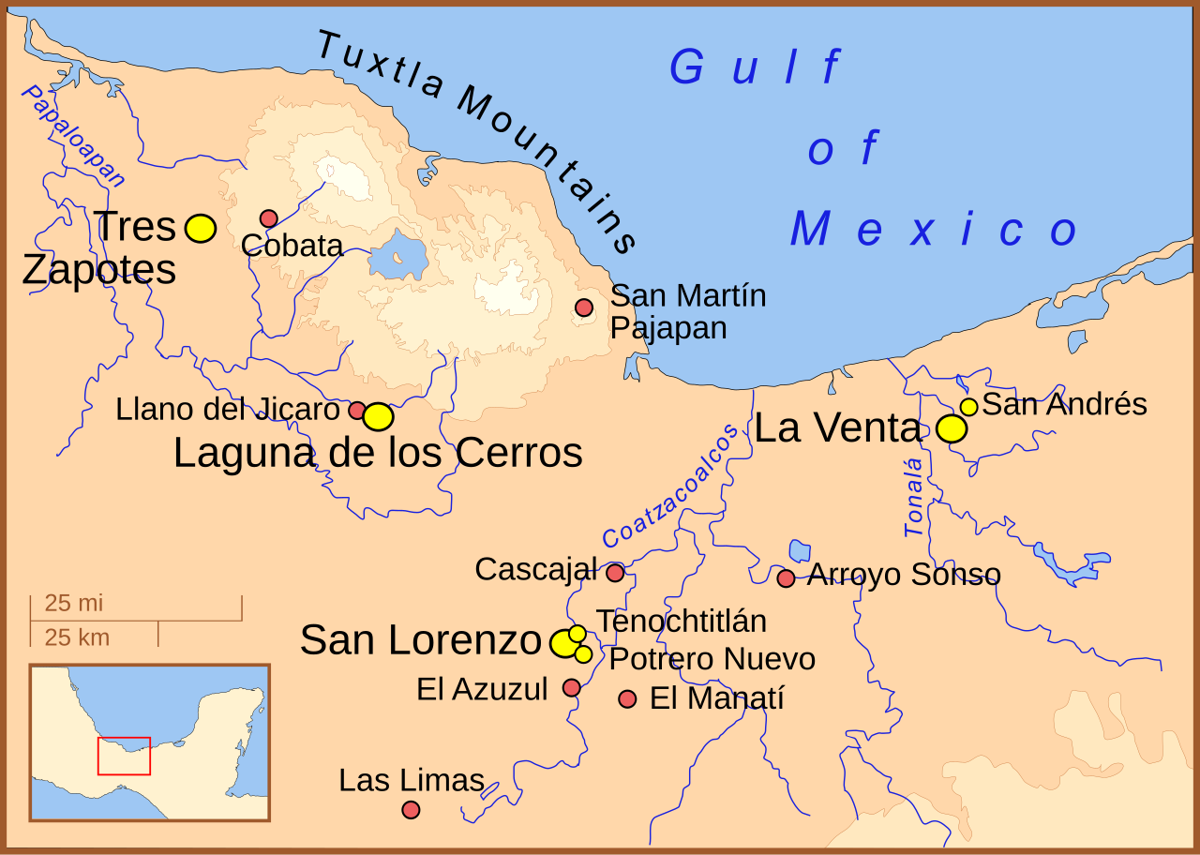
The Olmec Period which saw the rise of the Olmec culture's work in stone, first major cities appear.
Mesoamerica, including the Gulf Coast of Mexico and Maya lowlands, Guatemala
Civilization
4 min read
Updated By: History Editorial Network (HEN)
Published:
Updated:
Around 1200 BCE, during the Early Preclassic period, Mesoamerica witnessed the rise of complex societies, including the Olmec civilization along the Gulf Coast of present-day Mexico and the early development of Maya communities in the lowlands of present-day Guatemala and surrounding regions. The Olmec center of San Lorenzo reached its peak during this time, with large-scale earthworks, planned settlements, and the carving of colossal basalt heads that have been dated to approximately 1200–900 BCE.
At the same time, archaeological evidence from the Maya lowlands indicates the emergence of settled agricultural communities. Early villages began to form in areas such as the Petén Basin, with inhabitants cultivating crops like maize, beans, and squash. These communities constructed simple residential platforms and engaged in localized trade networks. While they had not yet developed the large urban centers or monumental architecture seen in later periods, the foundations of Maya society, including subsistence strategies and settlement patterns, were already taking shape.
Material findings from this period also show interaction between regions, with some shared stylistic and cultural elements appearing across Mesoamerica. Although the Olmec are often associated with early developments in monumental art and symbolism, the Maya region was simultaneously undergoing gradual social and cultural organization. These early developments would, over the following centuries, lead to the construction of ceremonial centers, the emergence of political leadership, and the eventual rise of cities such as Nakbe and El Mirador during the Middle and Late Preclassic periods.
#MayaCivilization
#Olmec
#PreclassicPeriod
#Mesoamerica
Primary Reference
The Maya

Explore the Life Moments of
 AI Twin