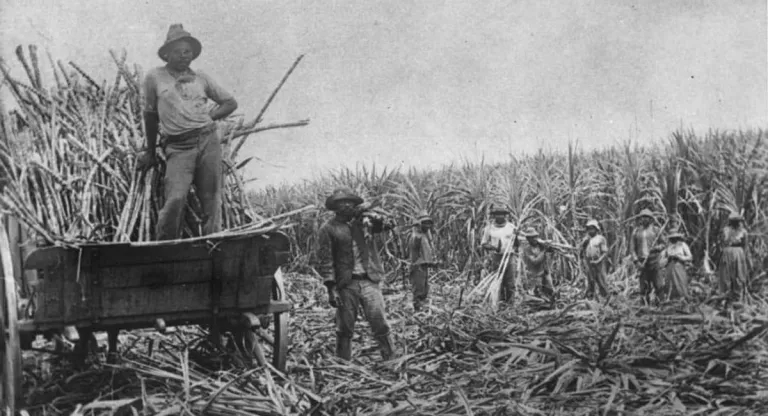
1937 Uba riots at Union Flacq: Riots spark over bad economy and joblessness, causing unrest.
Mauritius

Economic Downturn
Political
7 min read
Updated By: History Editorial Network (HEN)
Published:
Updated:
During the 1930s, deteriorating economic conditions and rampant unemployment plagued Mauritius, leading to rising tensions among the population. The simmering discontent reached a breaking point when riots erupted across the island. The population, facing extreme poverty and lack of opportunities, took to the streets in protest against the government's inability to address their hardships.
The riots had a significant impact on the socio-political landscape of Mauritius. They shed light on the dire living conditions endured by the majority of the population and exposed the urgent need for reforms. The authorities were forced to acknowledge the grievances of the people and began implementing measures to alleviate the economic struggles faced by the citizens.
On August 13, 1937, a significant labor protest erupted in Union-Flacq, Mauritius, marking a crucial moment in the island’s labor history. Around 200 small planters and laborers, frustrated with poor working conditions and economic exploitation in the sugar industry, marched towards the Union-Flacq sugar refinery. Their demonstration turned into an act of defiance as they overturned trucks and tramways, cut telephone wires, and set fire to sugarcane fields at L’Unité and Bel Étang.
As the crowd reached the refinery, armed estate staff stood in their way. Among them were Deoranarain Gujadhur and Ramnarain Gujadhur, who were on duty that day. Fearing for their safety, they opened fire on the demonstrators, resulting in three fatalities:
Sookdeo Gobin
Dawood Lallmahomed
Anadoh Gowree
These laborers succumbed to gunshot wounds, mainly to the sacrum and legs, while at least seven others were seriously injured, including Mamode Aniff Ramjan, Arjoon Narain, Abdool Azize Jeanath, Brizlall Beeharry, Sookdeo Koonjbeeharry, Pyandee Veerin, and Lutchmun Sungkur.
Despite the tragic deaths, the unrest did not end there. Enraged by the violence, protesters continued setting fire to sugarcane fields and spread their dissent across the island. The wave of resistance lasted for two more weeks, demonstrating the deep-seated frustration of the working class against the plantation owners and colonial authorities.
Significance of the 1937 Uprising
The Union-Flacq incident was not an isolated event but rather part of a broader struggle for workers' rights in Mauritius. At the time, laborers, particularly those in the sugar industry, faced low wages, long hours, and exploitative conditions. The 1937 protests served as a precursor to later labor movements and ultimately contributed to the rise of organized trade unions and labor reforms in the country.
The violent suppression of the protest also highlighted the inequality and harsh responses faced by laborers during colonial rule. In the following years, the labor movement gained momentum, paving the way for the Labor Party’s emergence and significant social and political changes in Mauritius.
This tragic yet pivotal moment remains a symbol of resistance in the island’s history, reminding future generations of the sacrifices made in the fight for fair labor rights and social justice.
#MomentsOfLife #MoofLife_Moment #MoofLife #MauritiusHistory #LaborRights #SugarEstateUprising
Primary Reference
1937 Uba riots at Union Flacq

Explore the Life Moments of
 AI Twin