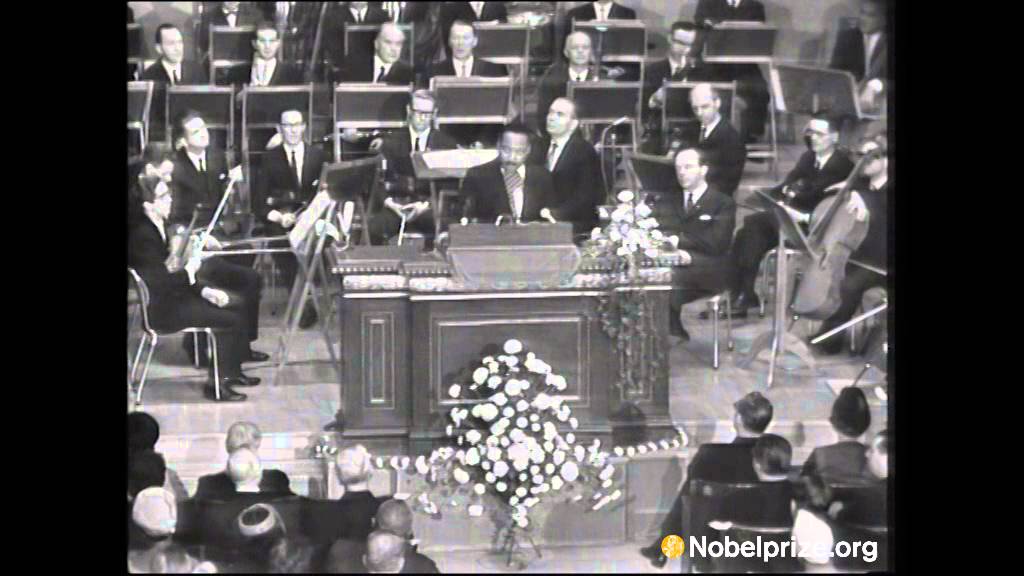
King receives Nobel Peace Prize
United States
Nobel Peace Prize
Nonviolence
Civil Rights
3 min read
Updated By: History Editorial Network (HEN)
Published:
Updated:
Martin Luther King Jr. was awarded the Nobel Peace Prize in recognition of his unwavering commitment to civil rights and his advocacy for nonviolent resistance as a means to achieve social justice. His philosophy was heavily influenced by the teachings of Mahatma Gandhi, who demonstrated the effectiveness of nonviolent protest against oppressive regimes. In his acceptance speech, King emphasized the importance of nonviolence, stating that it was a powerful tool for oppressed individuals seeking justice and human dignity. He referred to Gandhi's successful use of nonviolent methods to challenge the British Empire, highlighting the potential of truth and moral courage in the fight against injustice. King's approach to civil rights was not only about achieving legal equality but also about fostering a deeper understanding of human rights and dignity for all individuals, regardless of race or background.
The impact of King's receipt of the Nobel Peace Prize extended beyond the immediate recognition of his work.
#mooflife
#MomentOfLife
#NobelPeacePrize
#MartinLutherKingJr.
#CivilRightsMovement
#NonviolentResistance
#SocialJustice
Primary Reference
Martin Luther King Jr.

Explore the Life Moments of
 AI Twin