Marie Curie's Balancing Act: Scientist, Mother, Educator
Poland
Science
Education
4 min read
Updated By: History Editorial Network (HEN)
Published:
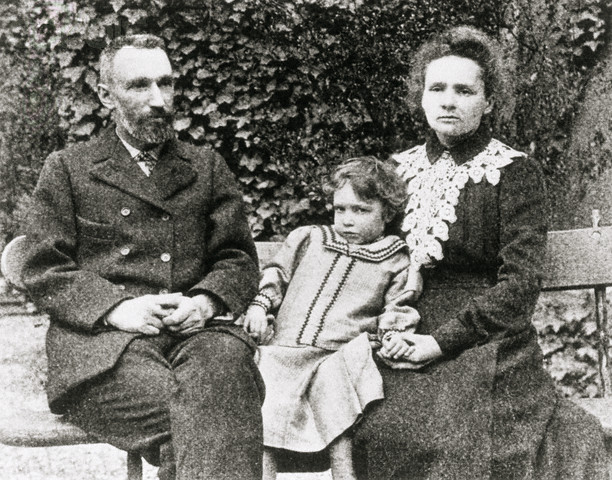
Marie Curie's first daughter, Irène, was born during a period of intense activity and personal commitment for her mother. Already deeply engrossed in her pioneering research on radioactivity, Marie Curie faced the challenge of balancing her scientific aspirations with her growing familial responsibilities. To support her family financially, Marie took up a teaching position at the École Normale Supérieure, an influential institution dedicated to the advanced education of women in Paris.
This dual role demanded considerable dedication. Curie meticulously managed her time between her research at her modest laboratory and her teaching duties, where she inspired a generation of young women with her scientific knowledge and enthusiasm. Her decision to teach was also a strategic move to gain a stable income, crucial for her research expenses and family welfare.
During this time, the research environment for women scientists was challenging, with limited access to resources and academic positions. Despite these obstacles, Curie's work led to groundbreaking discoveries that would later earn her two Nobel Prizes. Her perseverance was a testament to her commitment to advancing scientific knowledge while fulfilling her responsibilities as a mother and educator.
Marie Curie's adaptation to her teaching role exemplifies the broader context of women in science, highlighting the balance between professional and personal life. This period was pivotal, both in terms of her scientific trajectory and her influence on female education in science, inspiring future generations through her teaching and research.
#MarieCurie #WomenInScience #Education #Balance #ScientificCommitment #Motherhood #MoofLife
Primary Reference
Mozilla | PDF | Marie Curie | Science
Explore the Life Moments of
 AI Twin