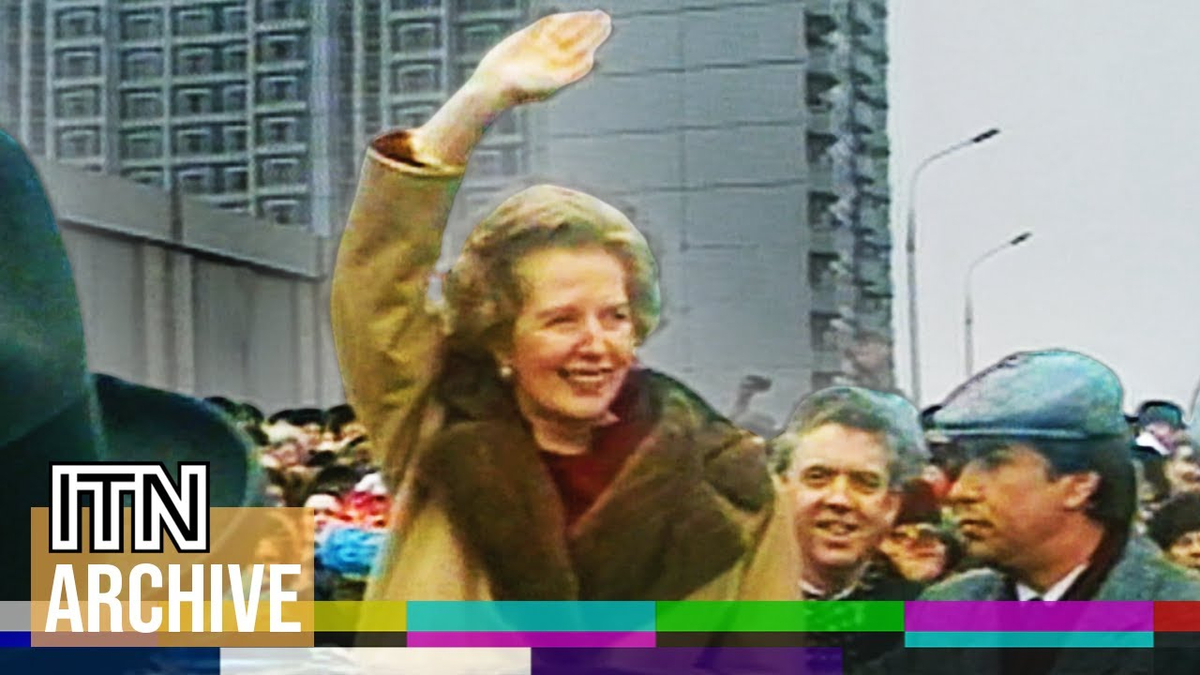
Margaret Thatcher visited USSR
United Kingdom
Political
ColdWar
IronLady
Diplomacy
Economy
6 min read
Updated By: History Editorial Network (HEN)
Published:
Margaret Thatcher's visit to the USSR in 1987 marked a historic moment not only for British-Soviet relations but also for the broader context of Cold War diplomacy. At the time, Thatcher, the Prime Minister of the United Kingdom, was a staunch anti-communist and an ally of U.S. President Ronald Reagan. Her political philosophy and rhetoric had earned her the nickname "The Iron Lady," particularly for her strong stance against Soviet communism. Yet, this visit showed her willingness to engage in dialogue and negotiate with the Soviet Union, signaling an important shift in global relations during one of the most tense periods in modern history.
Thatcher’s visit took place from March 26 to April 1, 1987, following an invitation from Soviet leader Mikhail Gorbachev, whose policies of "glasnost" (openness) and "perestroika" (restructuring) were transforming Soviet society. Gorbachev had met Thatcher before and saw her as a critical figure in Western politics whose opinions could influence both the direction of international relations and the U.S. administration. During her visit, Thatcher toured Moscow, Leningrad (now St. Petersburg), and Kiev, engaging in high-level talks with Gorbachev on arms control, human rights, and economic relations.
One of the most iconic moments of the trip was a televised debate between Thatcher and Soviet citizens, where she fielded questions directly from the public—a rare occurrence in the controlled environment of Soviet media. The fact that this took place under the watch of the Soviet government itself was a testament to Gorbachev's reforms. Thatcher's candor and direct responses on issues like freedom, democracy, and capitalism were striking in the context of Soviet political norms.
While Thatcher remained firm in her opposition to communism, her visit demonstrated that dialogue between East and West was possible. It helped thaw the icy relations between the two blocs, further contributing to the gradual easing of tensions that would eventually lead to the end of the Cold War. Her discussions with Gorbachev reinforced her belief in diplomacy and negotiation as essential tools in international politics, even with ideological opponents.
The visit had lasting significance for the world as it underscored the importance of engagement and the potential for ideological rivals to work towards peaceful resolutions. It also demonstrated Thatcher’s ability to maintain her principles while still playing a key role in fostering détente between the superpowers. This visit is remembered as a pivotal moment in late 20th-century history, contributing to the decline of Cold War hostilities and shaping the international political landscape for years to come.
#MargaretThatcher #ColdWar #IronLady #SovietVisit #Gorbachev #UKUSSRRelations #Glasnost #Perestroika #Diplomacy #MoofLife #MomentsOfLife
Primary Reference
The Gorbachev File | National Security Archive
Explore the Life Moments of
 AI Twin