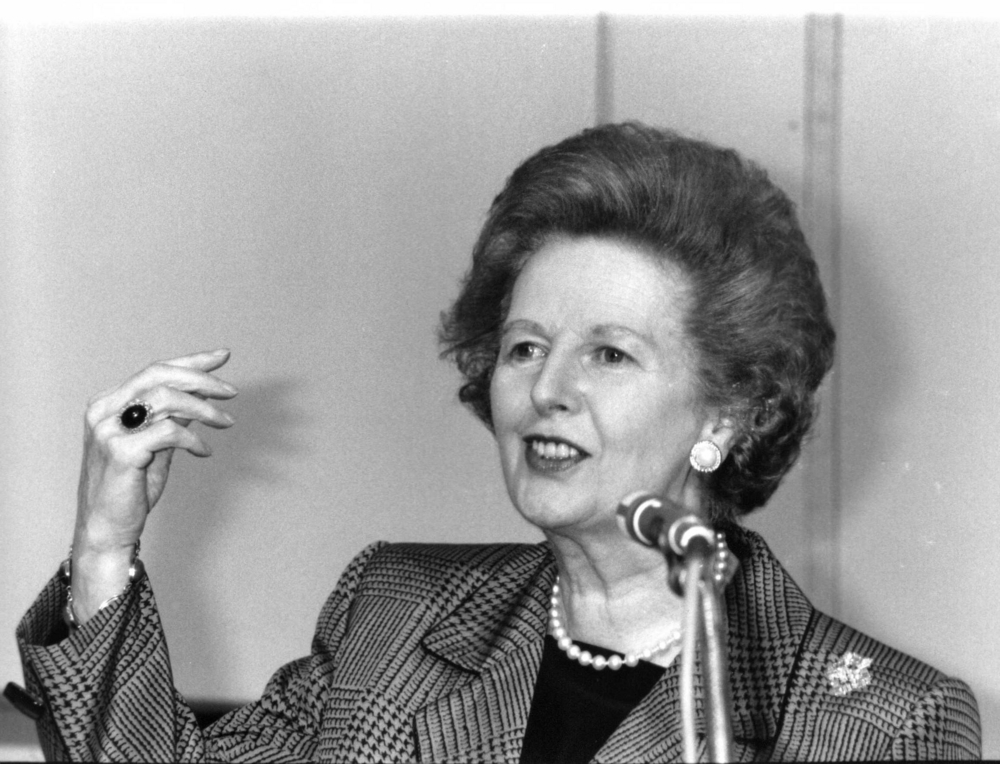
Currency rose after being unlinked from other currencies on Thatcher's orders, exceeding 3DM.
United Kingdom
Economic Policy
Political
5 min read
Updated By: History Editorial Network (HEN)
Published:
In a pivotal development during Margaret Thatcher's tenure, the British government made the strategic decision to uncap the currency, leading to significant economic ramifications. This decision was driven by Thatcher's firm belief in market forces and a deregulated economy, which aimed to strengthen the UK's economic standing on a global scale.
Before this move, the British pound was pegged to a fixed exchange rate system, specifically within the constraints of the European Exchange Rate Mechanism (ERM). This setup was initially designed to ensure stability and predictability in international trade. However, Thatcher was convinced that such constraints were stifling the UK's economic potential and inhibiting the natural appreciation of the pound against other major currencies.
Upon uncapping, the sterling swiftly rose above 3 Deutsche Marks (DM) in the foreign exchange markets. This marked a significant shift in the British economic climate, reflecting renewed investor confidence and an endorsement of Thatcher's economic policies. The rise in the pound facilitated a more favorable position regarding imports, reducing costs for UK businesses and consumers. It also bolstered the international perception of the UK's economic stability and sovereignty over its monetary policy.
The impact of this decision was multifaceted. The immediate appreciation of sterling provided a stimulus to investor confidence, but also introduced challenges for exporters due to a stronger domestic currency making British goods more expensive abroad. However, Thatcher's administration believed that the long-term benefits of a free-floating currency outweighed these short-term disadvantages.
This moment is often revisited in discussions surrounding economic policy, exchange rate management, and the broader implications of deregulation. By allowing market mechanisms to determine the value of the pound, the Thatcher government set a precedent in economic policy, reinforcing the intertwining of political decisions with market outcomes.
The strategic unpegging of the sterling is a testament to Thatcher's broader economic philosophy, which emphasized deregulation, market efficiency, and minimal state intervention. This decision not only molded the UK's economic trajectory but also provided a critical example of the potential benefits and risks associated with floating exchange rates.
#EconomicPolicy #ForexHistory #MargaretThatcher #SterlingRises #MoofLife
Primary Reference
The Long Shadow of the Deutschemark (Chapter 6) - Making a ...
Explore the Life Moments of
 AI Twin