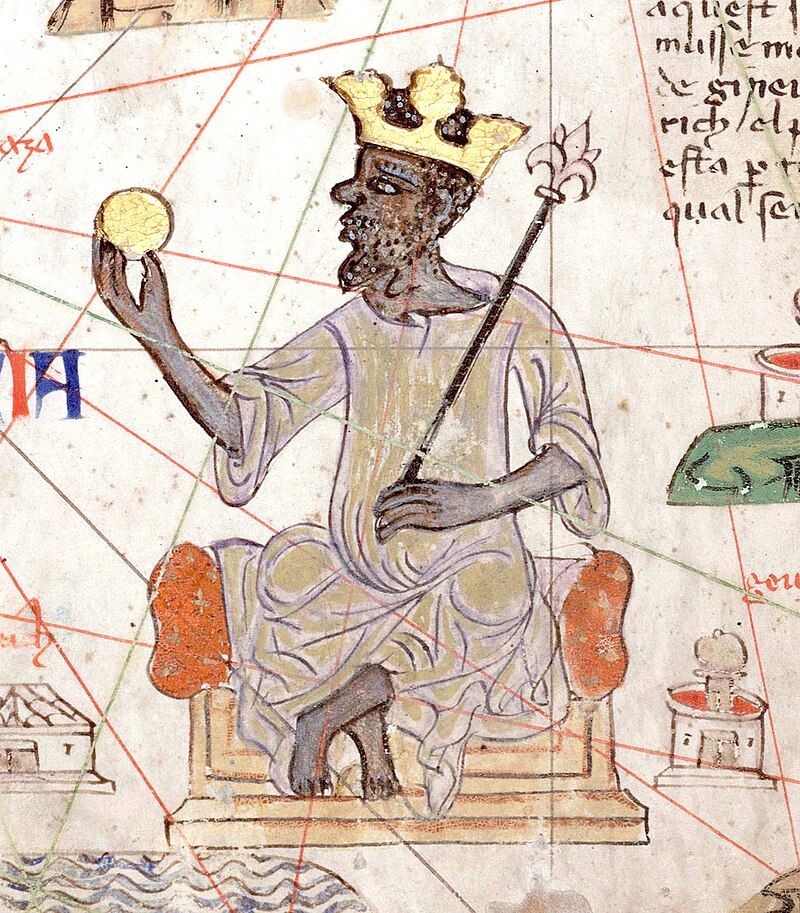
Mansa Musa's Rise to Power
West Africa
Leadership
African Empires
3 min read
Updated By: History Editorial Network (HEN)
Published:
Updated:
Mansa Musa's rise to power marked a pivotal moment in the history of the Mali Empire, which is often regarded as a golden age for the region. Musa ascended to the throne following the absence of his predecessor, Muhammad, who did not return from an expedition. This absence led to Musa being recognized as the mansa, or emperor, of Mali. His reign is characterized by significant developments in trade, culture, and education, particularly in the city of Timbuktu, which became a center for Islamic scholarship and learning. Under Musa's leadership, the empire expanded its influence across West Africa, leveraging its rich natural resources, including gold, to establish trade routes that connected various regions and facilitated economic growth.
Mansa Musa is also known for his pilgrimage to Mecca, which showcased the wealth and power of the Mali Empire to the broader Islamic world. His journey not only emphasized his devout Islamic faith but also served to promote Mali as a significant player in global trade. The influx of wealth during his reign led to the construction of numerous mosques and educational institutions, further enhancing Timbuktu's reputation as a hub of knowledge. Musa's policies and initiatives had a lasting impact on the cultural and economic landscape of West Africa, solidifying Mali's status as a dominant empire during this period.
#mooflife
#MomentOfLife
#MansaMusa
#MaliEmpire
#Timbuktu
#IslamicScholarship
#WestAfricaHistory
Primary Reference
Mansa Musa

Explore the Life Moments of
 AI Twin