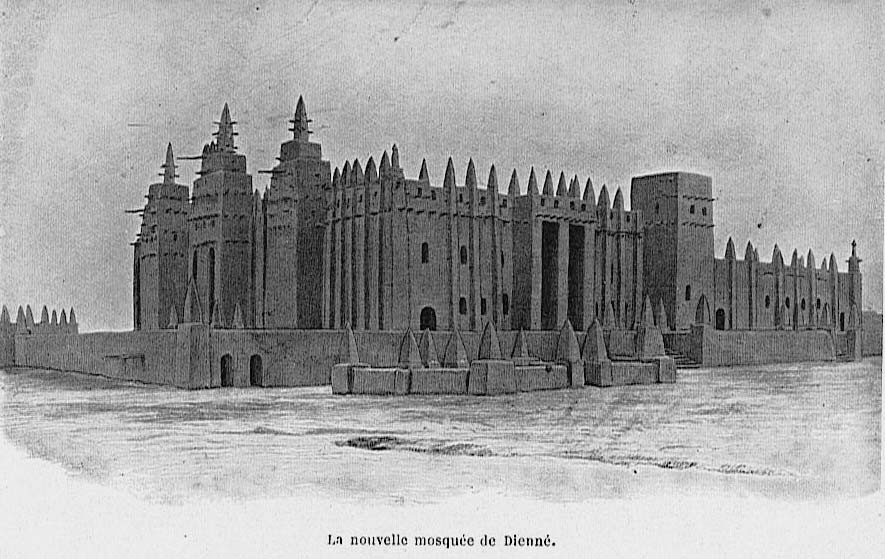
Construction of the Great Mosque of Djenné
West Africa
Architecture
Cultural Heritage
Historical Landmarks
3 min read
Updated By: History Editorial Network (HEN)
Published:
Updated:
The Great Mosque of Djenné is a prominent example of Sudano-Sahelian architecture, characterized by its use of mudbricks and adobe plaster. The original mosque is believed to have been constructed around the early 13th century, on the site of a former palace that was demolished by Sultan Kunburu after his conversion to Islam. This architectural style features large wooden-log support beams that extend from the wall face, creating a distinctive appearance that has become synonymous with the region. The mosque served as a center for Islamic learning and community gatherings, playing a crucial role in the cultural and religious life of Djenné and the surrounding areas.
The current structure of the Great Mosque, which was built during the French colonial period, dates back to the early 20th century. It was constructed by traditional Djenne masons who aimed to recreate the original design while adhering to the historical architectural principles. The mosque has since become a UNESCO World Heritage site, recognized for its cultural significance and architectural uniqueness. It attracts numerous visitors and pilgrims each year, contributing to the local economy and promoting the preservation of traditional building techniques. The Great Mosque of Djenné stands as a testament to the region's rich history and the enduring legacy of Islamic architecture in West Africa.
#mooflife
#MomentOfLife
#GreatMosqueOfDjenné
#Sudano-sahelianArchitecture
#IslamicArchitecture
#UnescoWorldHeritage
#DjennéHistory
Primary Reference
Great Mosque of Djenné

Explore the Life Moments of
 AI Twin