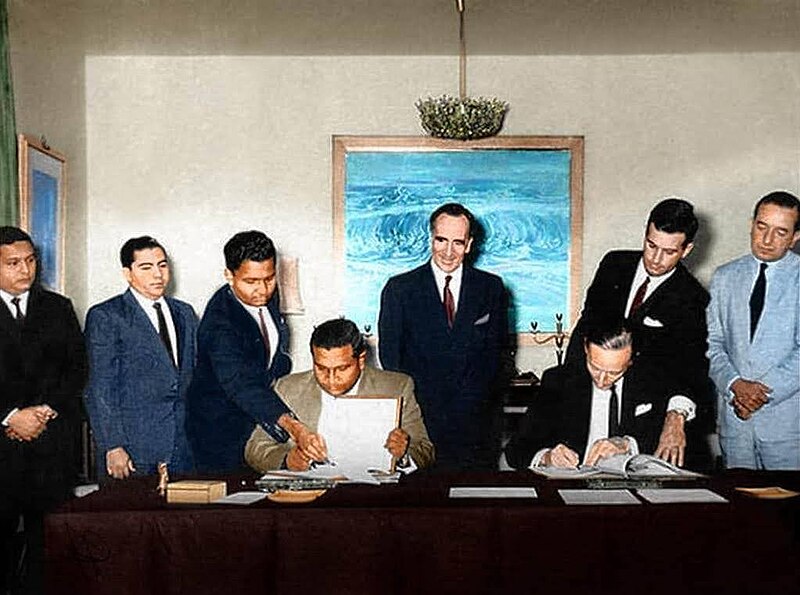
Maldives' Gains Independence from the British
Maldives
Political
Economic Downturn
4 min read
Updated By: History Editorial Network (HEN)
Published:
Updated:
After decades of colonial rule, the Maldives successfully gained independence from Britain. The chain of events that led to this pivotal shift began with growing nationalist sentiments among the Maldivian population, alongside similar movements across Asia. The negotiations were characterized by diplomatic engagements between the British government and Maldivian leaders.
Previously, the Maldives had been a British protectorate, where the British controlled foreign policy and defense matters, while allowing for local governance. The path to full autonomy was marked by the formation of a constitutional government and the establishment of political structures capable of self-governance.
Upon achieving independence, the Maldives was able to exercise complete sovereignty over its affairs, marking a new chapter in its history. This transition had a significant impact on the country’s social and economic development. Domestically, it sparked a period of national pride and identity formation. Internationally, it allowed the Maldives to join global organizations and form bilateral relations independently.
The economic implications were also profound. Freed from colonial ties, the Maldives began developing its tourism industry, which is now the mainstay of its economy. Statistics show that the country’s Gross Domestic Product (GDP) experienced steady growth post-independence, largely driven by tourism and fishing.
This milestone is not just a historical footnote but a foundational moment for the Maldives, shaping its trajectory towards modern nationhood and contributing to its current status in the global community.
#MaldivesIndependence #HistoricalMoment #MoofLife
Primary Reference
Independence of the Maldives - Wikipedia
Explore the Life Moments of
 AI Twin