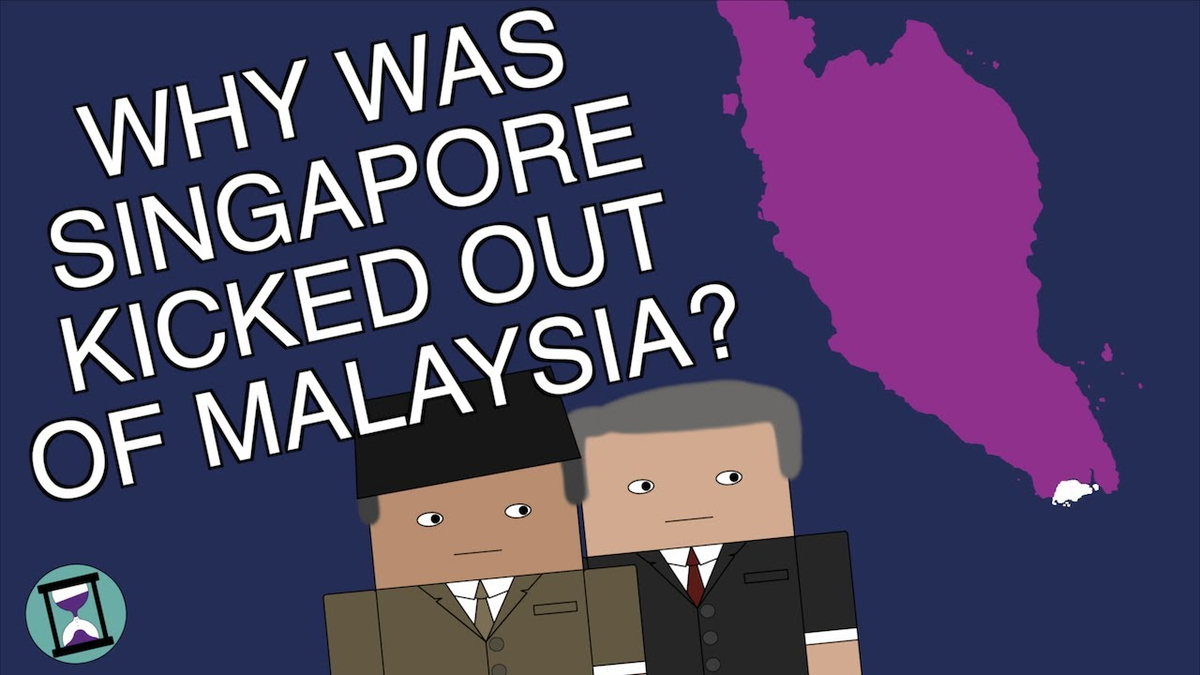
Singapore withdraws, leaving Malaysia with 13 states.
Malaysia

Political
Global Trade
6 min read
Updated By: History Editorial Network (HEN)
Published:
Singapore's withdrawal from Malaysia marked a pivotal juncture in Southeast Asian history. The decision was rooted in deep-seated political and ideological differences between the Malaysian federal government and the Singaporean leadership. These disparities encompassed economic policies, racial issues, and political strategies. Tensions peaked during the period leading up to the withdrawal, with both sides unable to reconcile their conflicting visions.
Malaysia initially formed as a federation of 14 states, incorporating Singapore, Sabah, and Sarawak along with the Malay Peninsula's 11 states. However, disputes between Malaysia's federal government and Singapore's ruling party, the People's Action Party (PAP), intensified. The PAP, led by Lee Kuan Yew, advocated for a more inclusive, race-neutral approach to governance, contrasting sharply with the pro-Malay policies of the United Malays National Organisation (UMNO).
The economic and political friction between Kuala Lumpur and Singapore was exacerbated by communal riots and increasing rhetoric. The unrest reflected broader regional and communal divides, further straining an already fragile union. These circumstances propelled the Malaysian parliament to vote in favor of Singapore's separation.
As Singapore exited the federation, Malaysia's composition shifted to 13 states. This change had significant ramifications for both nations. For Malaysia, it meant consolidating its federal structure and reaffirming its focus on Malay interests. For Singapore, it marked the beginning of its journey as an independent republic, setting the stage for rapid economic development and global integration.
In financial terms, the separation did not severely diminish Malaysia's economic prospects, but it reshaped trade dynamics. Post-withdrawal, both nations pursued distinct economic paths. Malaysia continued to leverage its natural resources while Singapore evolved into a global financial hub.
Statistically, the split redefined population demographics and resource distribution. Though Singapore housed a smaller portion of the overall population, it possessed strategic trade ports and a burgeoning industrial base. These assets were central to Singapore's successful transformation into a leading economy.
The historical significance of this event is reflected in its enduring impact on regional politics, economics, and identity. Singapore's autonomy paved the way for its emergence as a key player in global markets, while Malaysia continued to evolve its national policies and economic strategies.
#MalaysiaHistory #SingaporeSeparation #SEAsiaPolitics #RegionalDynamics #MoofLife
Primary Reference
Malaysia profile - Timeline - BBC News

Explore the Life Moments of
 AI Twin