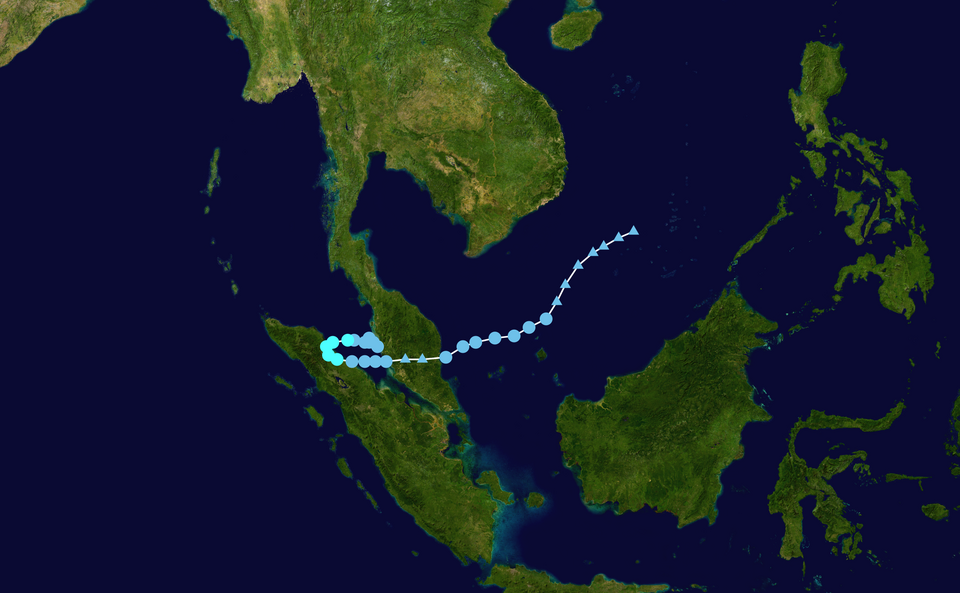
Cyclone Senyar makes landfall, causing deaths and mass evacuations
Malaysia
4 min read
Updated By: History Editorial Network (HEN)
Published:
Cyclone Senyar made landfall in Malaysia on November 28, 2025, causing widespread damage, fatalities, and mass evacuations across affected regions. The tropical storm brought heavy rainfall, strong winds, and flooding, impacting both urban and rural communities. Emergency services and local authorities mobilized quickly to assist residents in high-risk areas, coordinating evacuations to shelters and providing essential relief supplies. Roads, infrastructure, and homes suffered significant damage in several states, while power outages and disrupted communication networks complicated rescue and recovery efforts. Meteorologists noted that Cyclone Senyar’s intensity was unusual for the region, emphasizing the need for robust preparedness measures and early-warning systems.
The cyclone’s impact carries both humanitarian and economic implications. The immediate focus has been on search and rescue operations, medical assistance, and the provision of food and clean water for displaced populations. In addition, authorities are assessing damage to agriculture, fisheries, and key infrastructure, which could have long-term effects on local economies. The event has also prompted discussions on climate change, as shifting weather patterns and rising sea temperatures are linked to increasingly severe storms in Southeast Asia. International aid agencies and neighboring countries have offered support, reflecting regional solidarity in disaster response. Overall, Cyclone Senyar underscored the vulnerability of coastal and low-lying areas to extreme weather events, highlighting the urgency of disaster preparedness, resilient infrastructure, and climate adaptation measures.
Primary Reference
Cyclone Senyar

Explore the Life Moments of
 AI Twin