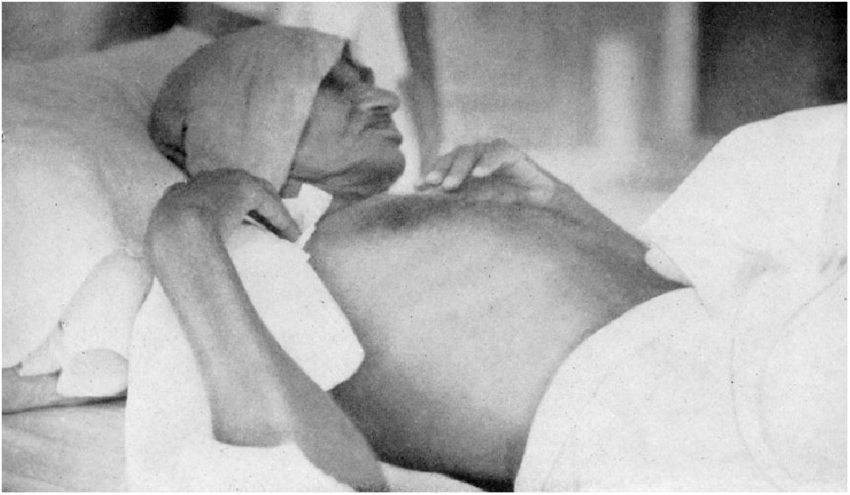
Fast at Rajkot for breach of trust.
India

Political
6 min read
Updated By: History Editorial Network (HEN)
Published:
Updated:
In the backdrop of British colonial rule in India, Mahatma Gandhi took a decisive step that underscored his principles of non-violence and truth. Responding to the breach of trust by local authorities in Rajkot, Gandhi commenced a fast as a form of non-violent protest.
The context revolved around a longstanding issue in Rajkot related to the rights and privileges of the local populace. The ruling authority had reneged on promises made to the residents, leading to widespread discontent. To address this breach of trust, Gandhi decided on a fast, a method he had employed effectively in the past to draw attention to injustices and pressures for change. Gandhi's fast was not merely about physical resistance but served as a moral weapon intended to appeal to the conscience of the oppressors and the world at large.
The impact of this fast was profound. It galvanized public opinion across India, strengthening the resolve of the independence movement. News of Gandhi's fast spread rapidly, causing unrest among the British officials. The local administration in Rajkot came under intense scrutiny as national leaders flocked to the scene to support Gandhi and the cause.
This particular event did not yield immediate tangible concessions from the Rajkot authorities, but it played a crucial role in highlighting the issue of governance and accountability in the princely states under British suzerainty. The moral pressure exerted by Gandhi's action contributed to the larger narrative of non-violent resistance and civil disobedience that eventually led to India’s independence.
The fast was marked by widespread mobilization within the region, drawing people from various walks of life who supported Gandhi either by joining the protest or spreading the message. This collective action demonstrated the power of non-violent protest and the influence Gandhi wielded over the masses.
Gandhi’s approach in Rajkot emphasized the significance of keeping promises and maintaining trust, which were foundational pillars of his philosophy. His fast highlighted the ethical dimensions of political engagements and governance, urging a revaluation of the methods employed by rulers.
In summation, Gandhi’s fast at Rajkot was another critical chapter in his non-violent struggle against colonial rule, reflecting his deep commitment to principles and his ability to mobilize masses towards a common cause.
#MoofLife #BreachOfTrust #NonViolentProtest #Gandhi #CivilDisobedience #IndiaStruggle4Freedom.
Primary Reference
An aesthetic cartography of fast
Explore the Life Moments of
 AI Twin