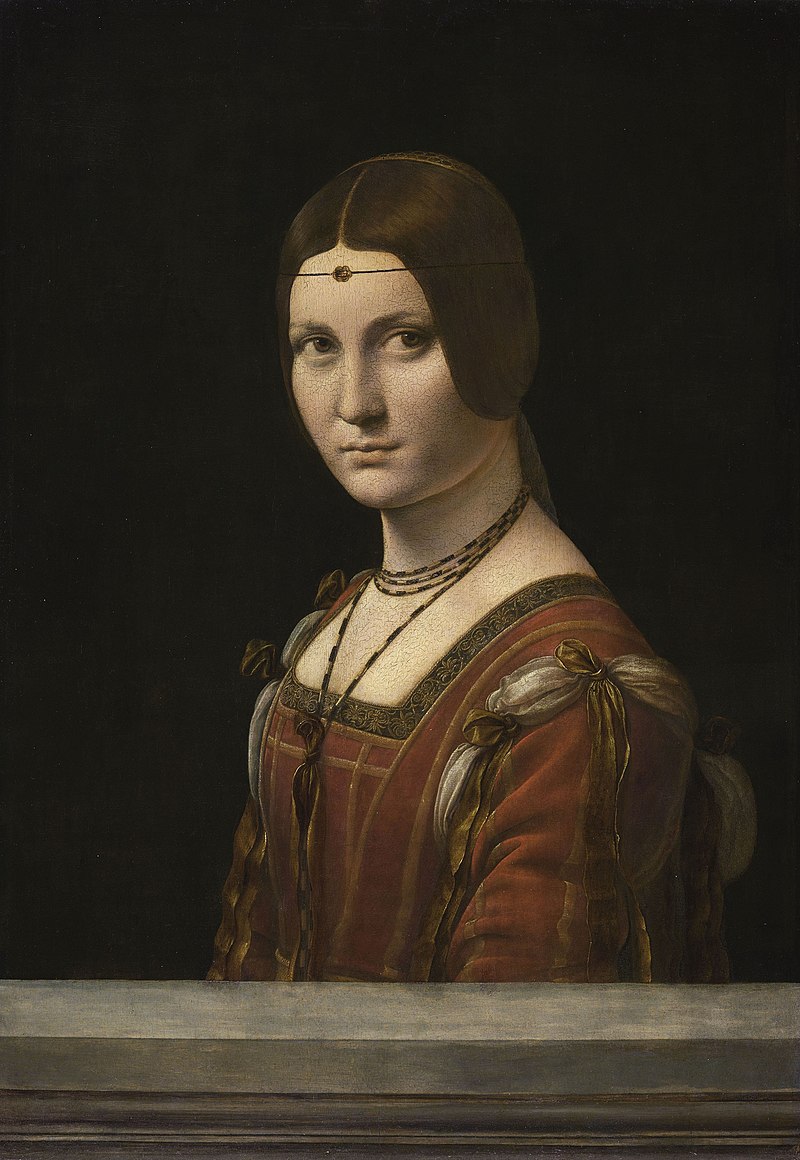
Leonardo's La Belle Ferronnière: Renaissance masterpiece showcasing chiaroscuro and human expression.
Italy
Art
3 min read
Updated By: History Editorial Network (HEN)
Published:
Updated:
Leonardo da Vinci completed the painting known as La Belle Ferronnière. This portrait details a young woman, often identified as the wife of a scholar at the court or a mistress of the Duke of Milan, Ludovico Sforza. The artwork demonstrates Leonardo's mastery of oil painting and his attention to detail in capturing human expression. The work is notable for its use of chiaroscuro, a technique employing strong contrasts between light and dark to achieve a sense of volume in modeling three-dimensional objects and figures, enhancing the naturalism of the subject's face.
The subject wears a ferronnière, which is a type of head ornament, indicating her status. The dark background of the painting helps to accentuate the features of the woman, providing focus directly on her gaze and expression. Leonardo was known for his keen observation of the human form and facial anatomy, visible here in the detailed rendering of the woman's eyes and lips.
Historically, this painting came into the possession of the Louvre Museum, where it remains an important part of the collection. Being at the Louvre, it has been accessible to countless visitors, furthering its influence and study in art history. The Louvre's conservation efforts ensure that La Belle Ferronnière remains in good condition for future generations to view and analyze.
#LeonardoArt #LouvreCollection #Chiaroscuro #RenaissanceArt #ArtHistory #MoofLife
Explore the Life Moments of
 AI Twin