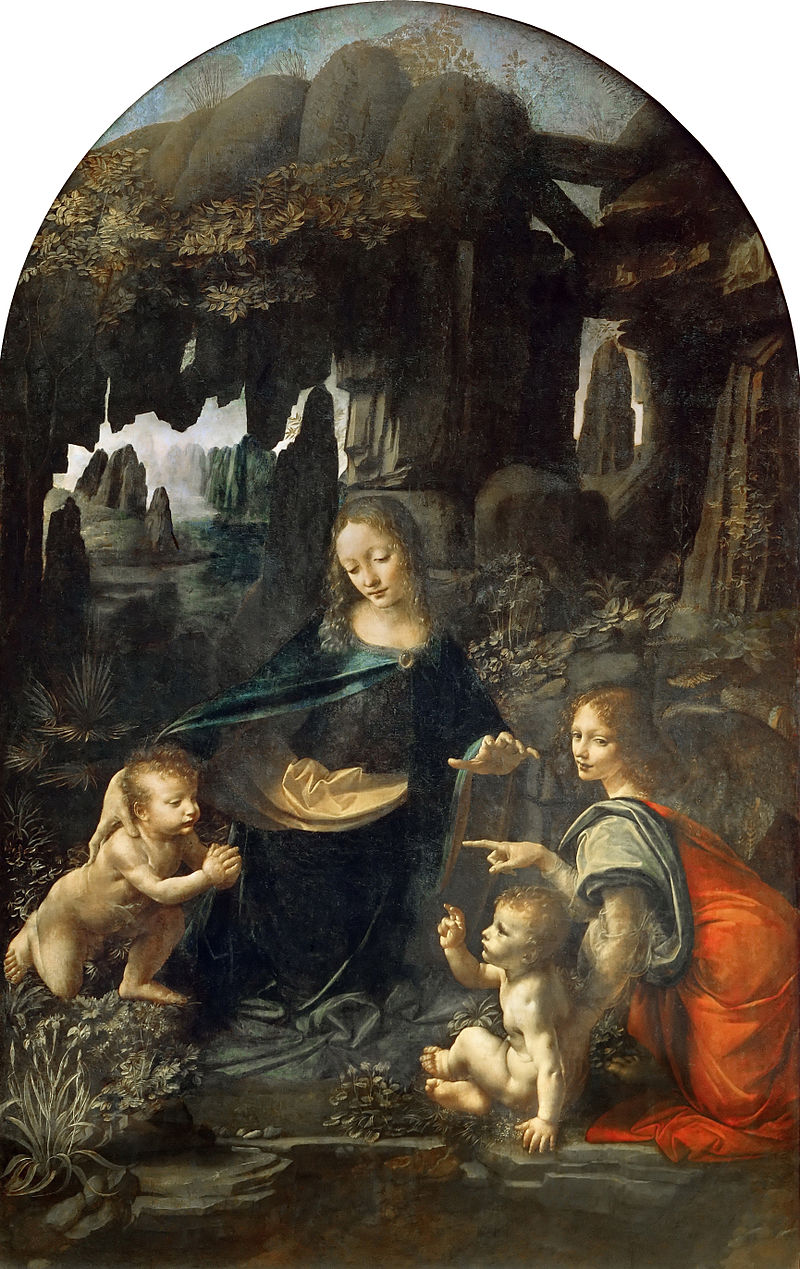
Leonardo da Vinci's "Virgin of the Rocks": Renaissance masterpiece inspiring naturalistic artistry with innovative techniques.
Italy
Art
4 min read
Updated By: History Editorial Network (HEN)
Published:
Updated:
Commissioned by the Confraternity of the Immaculate Conception, Leonardo da Vinci completed the first version of the "Virgin of the Rocks" within a three-year span. The Confraternity, a religious group in Milan, required the painting for their altarpiece, and Leonardo's work was intended to depict the Immaculate Conception with utmost reverence.
The artwork illustrates the Virgin Mary, the infant Christ, the infant John the Baptist, and an angel. It diverged from traditional religious compositions by placing the figures in a fantastical rocky cavern rather than a recognizable biblical or rural setting. Leonardo employed his knowledge of anatomy, botany, and geology to instill a deep sense of realism and naturalism in the depiction.
Technically, Leonardo's use of chiaroscuro—a technique that contrasts light and shadow—brings a remarkable three-dimensionality to the figures. Additionally, his application of sfumato—blurring the lines to create a smoky effect—imbues the composition with a subtle warmth and atmosphere.
The "Virgin of the Rocks" significantly impacted Renaissance art by demonstrating the potential of oil paint as a medium. The natural poses and interactions among the figures influenced numerous artists, marking a shift towards more dynamic and realistic representations. The depth of emotion and naturalistic detail showcased Leonardo's unparalleled observational skills and innovative techniques.
#LeonardoDaVinci #RenaissanceArt #VirginOfTheRocks #ItalianArt #ArtHistory #MoofLife
Explore the Life Moments of
 AI Twin