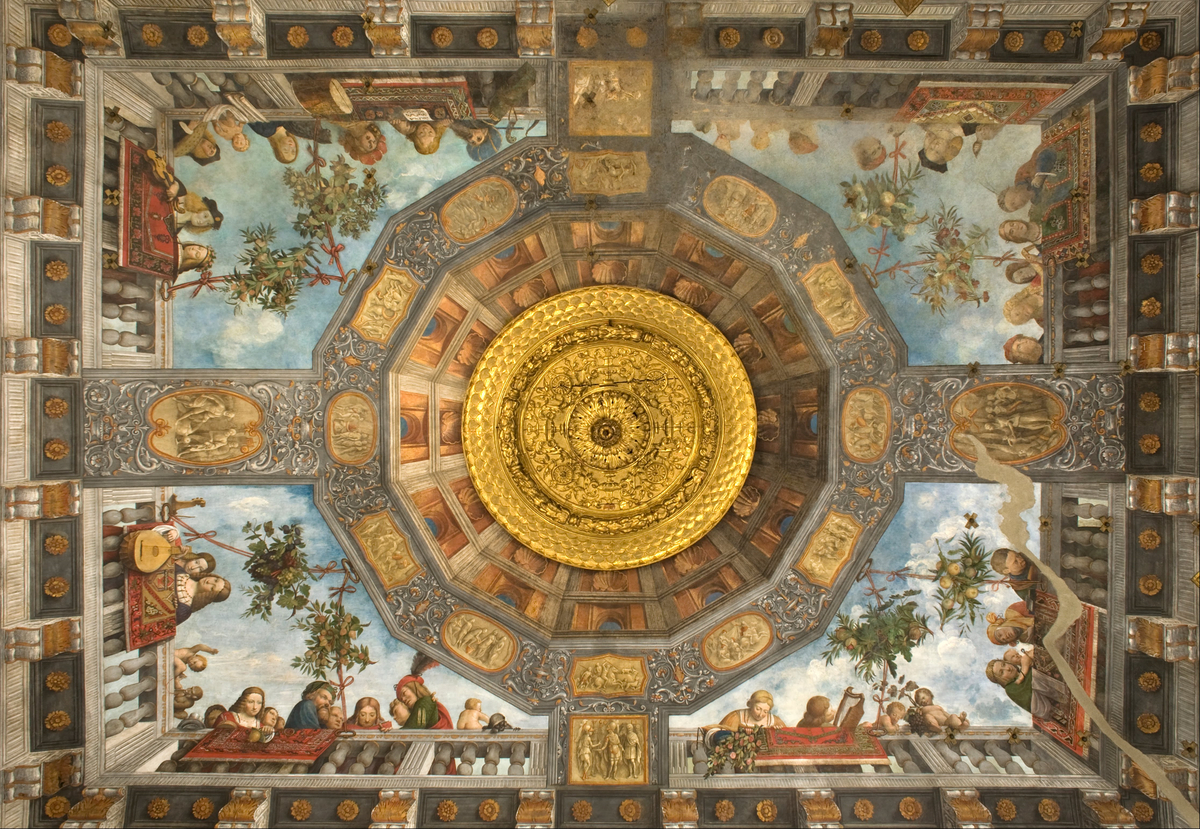
Leonardo da Vinci's Trompe-l'œil Masterpiece: Sala delle Asse at Castello Sforzesco, Milan.
Italy
Art
4 min read
Updated By: History Editorial Network (HEN)
Published:
Updated:
Leonardo da Vinci, the renowned polymath, completed the trompe-l'œil decoration of the Sala delle Asse in the Castello Sforzesco, Milan during the Italian Renaissance under the patronage of Ludovico Sforza, Duke of Milan. The Sala delle Asse, or 'Room of the Tower', features an intricate design that employs realism to create the illusion of a dense grove of trees through intertwining branches, leaves, and golden knots, showcasing Leonardo's mastery in blending art and nature.
The artwork's completion marked an important point in the history of Renaissance art, illustrating Leonardo's innovative techniques and his contribution to the development of trompe-l'œil, which translates to 'deceive the eye.' The decoration not only enhanced the aesthetic environment of the Castello Sforzesco but also reflected the sophistication and creativity of the Milanese court. The use of intricate details and spatial manipulation in the Sala delle Asse demonstrated Leonardo's exceptional understanding of botany, perspective, and light.
The impact of this artwork extends beyond its visual appeal, as it is a vital example of Leonardo's artistic vision and his ability to execute large-scale projects. It reinforced the status of the Castello Sforzesco as a cultural and artistic center during Ludovico Sforza's rule and contributed significantly to Milan's artistic legacy.
Leonardo's work on the Sala delle Asse continues to be studied and admired, with ongoing restoration efforts aiming to preserve the fresco's details. Art historians and scholars frequently analyze this project to gain insights into Leonardo's techniques and his approach to integrating art with natural elements.
#LeonardoDaVinci #CastelloSforzesco #RenaissanceArt #TrompeLoeil #ArtPreservation #MoofLife
Explore the Life Moments of
 AI Twin