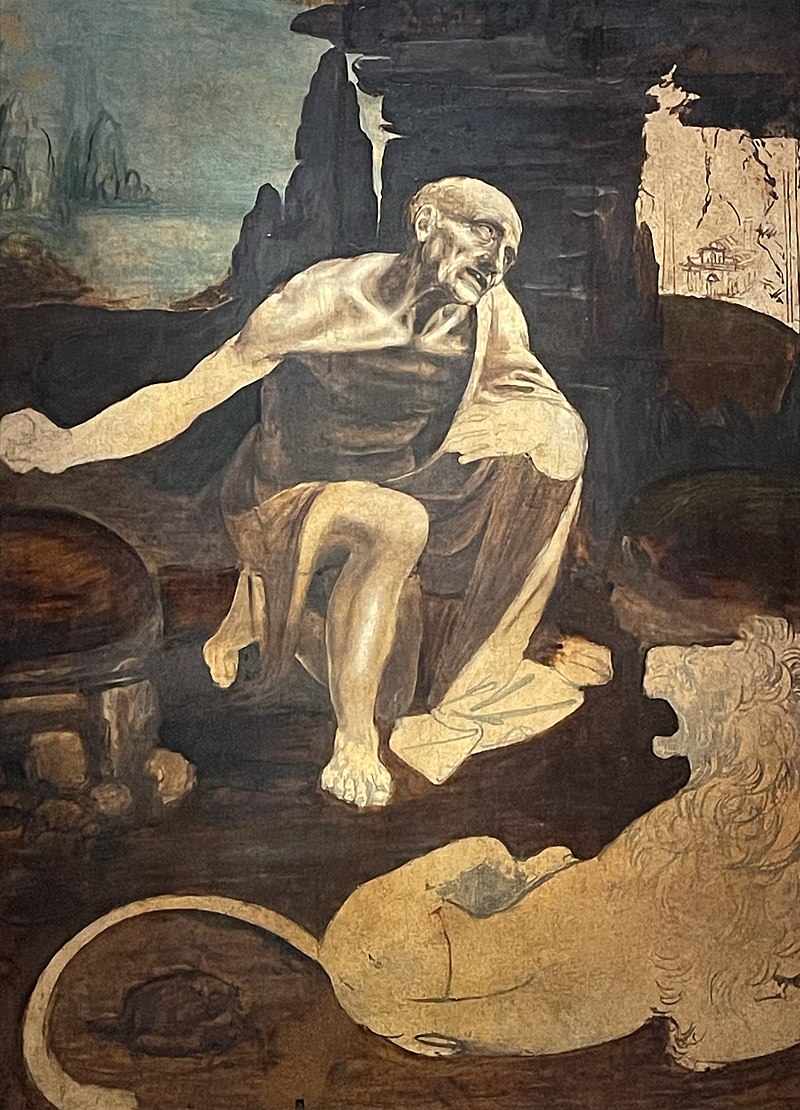
Leonardo da Vinci's "Saint Jerome in the Wilderness": Unfinished masterpiece of emotional realism and innovation.
Italy
Art Renaissance
3 min read
Updated By: History Editorial Network (HEN)
Published:
Updated:
During a notable period of Leonardo da Vinci's early career, he embarked on creating "Saint Jerome in the Wilderness." This work remains unfinished but is significant for its emotional intensity and innovative approach. Saint Jerome, known for his contributions to the early Christian Church, is depicted in a moment of deep penitence and reflection. Leonardo's choice to portray the saint in such a vulnerable state was a departure from the more static and glorified representations common in religious art of that time.
The composition demonstrates Leonardo's mastery in capturing human emotions and his advanced knowledge of anatomy. Saint Jerome is rendered with a lifelike quality, his muscles and tendons meticulously detailed, showcasing Leonardo’s commitment to realism. This work also highlights Leonardo's pioneering use of chiaroscuro, the contrast between light and dark, which adds depth to the image and enhances the emotional gravity of the scene.
Leonardo's "Saint Jerome in the Wilderness" had a profound impact on the art community, influencing contemporaneous artists and future generations. His ability to merge technical skill with deep human emotion set a new standard for narrative art. Despite its unfinished state, the piece remains a critical study for understanding Leonardo's artistic development and his innovative techniques.
#ArtHistory #LeonardoDaVinci #SaintJerome #InnovativeArt #HumanEmotion #Renaissance #MoofLife
Explore the Life Moments of
 AI Twin