Leonardo da Vinci's Revolutionary Studies in AnatomyTransform Understanding of Human Body
Italy
Science
Art
4 min read
Updated By: History Editorial Network (HEN)
Published:
Updated:
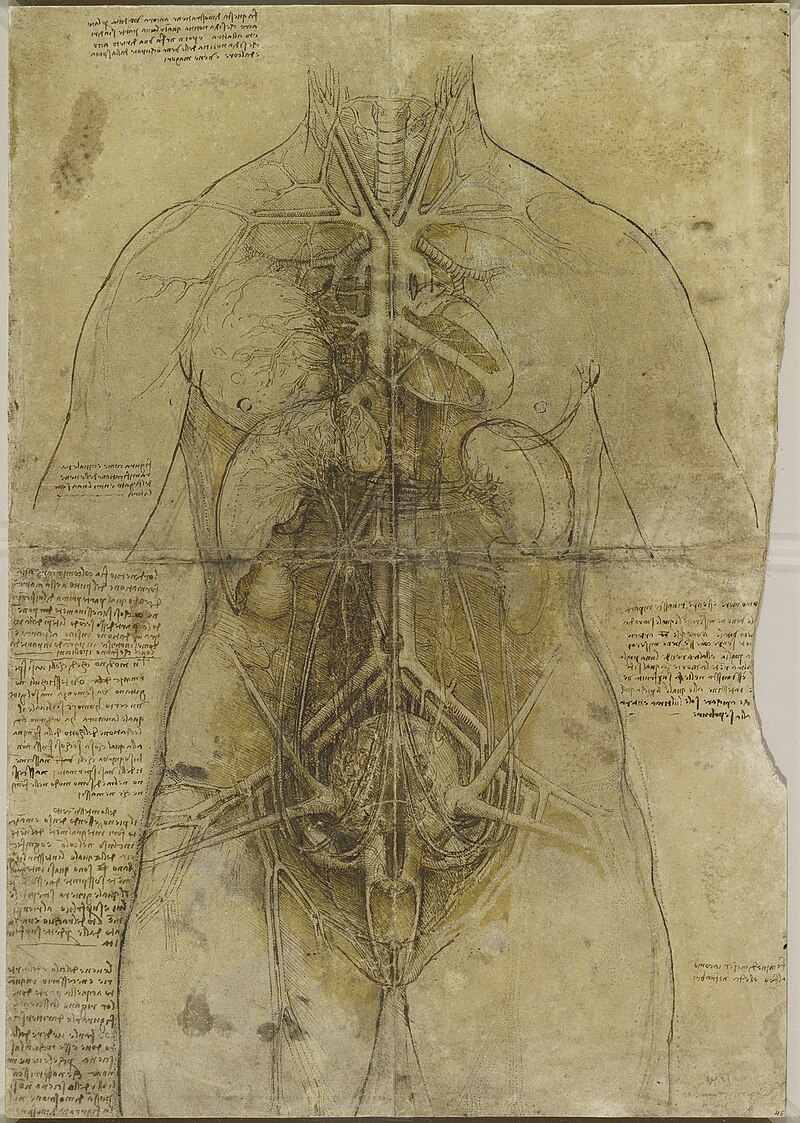
Leonardo da Vinci, renowned for his contributions to art, took an extraordinary interest in the human body. He embarked on an extensive study of anatomy, resulting in over 240 detailed drawings and 13,000 words written toward an anatomy treatise. This pursuit involved dissections of human and animal bodies, where he meticulously documented muscles, vessels, organs, and skeletal structures. Leonardo's work was set apart by its precision and foresight, aiming to understand the body's mechanics through art and science.
His anatomical studies influenced not just the art world by enabling more accurate and lifelike representations of the human figure, but also later medical research. Leonardo's observations preempted much of what the scientific community would later formally document about human anatomy. His integration of detailed sketches with comprehensive notes aimed to provide a more accessible learning tool for contemporary and future anatomists.
Leonardo's use of cross-sectional drawings, which showed the internal structures of the body, was groundbreaking. This methodology offered a clear representation of how the body functions internally. His work anticipated modern imaging techniques, like MRI and CT scans, by striving to reveal the unseen.
Today, Leonardo's anatomical drawings are housed in prestigious collections worldwide. They remain a testament to his unparalleled pursuit of knowledge and the intersection of art and science. His contributions laid foundational blocks for future explorations in both fields and continue to be celebrated as profound achievements long after their creation.
#LeonardoDaVinci #Anatomy #ArtAndScience #HistoryOfScience #MedicalIllustration #MoofLife
Explore the Life Moments of
 AI Twin