Leonardo da Vinci's Revolutionary Anatomical Studies: Insight from Cardinal's Secretary
Italy
Science
Art
4 min read
Updated By: History Editorial Network (HEN)
Published:
Updated:
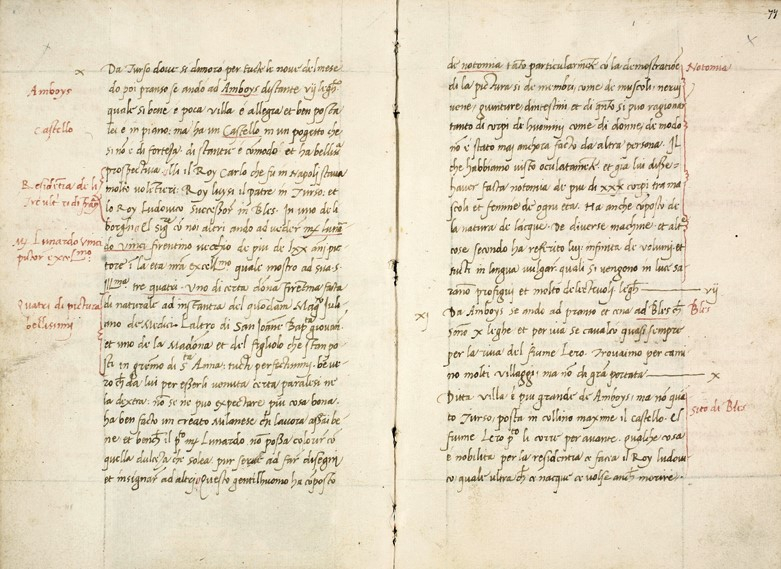
Cardinal Louis d'Aragon’s secretary, Antonio de Beatis, visited Leonardo da Vinci while the latter was in the service of King Francis I of France. De Beatis recorded details of Leonardo’s work during this visit, providing valuable insights into Leonardo’s studies on human anatomy.
Leonardo da Vinci had dedicated a significant portion of his life to understanding the human body. His treatise on anatomy involved detailed studies and numerous sketches, including observations based on dissections. Leonardo's anatomical sketches showcased his understanding of the human skeletal, muscular, and vascular systems. His approach combined artistic skill with scientific inquiry, documenting the human form with unprecedented precision.
The observations made by de Beatis highlighted Leonardo’s expertise and meticulous documentation. Leonardo’s anatomical studies were intended to be part of a comprehensive treatise, although they were not fully published during his lifetime. These works laid the groundwork for future advancements in both art and anatomy, influencing subsequent generations of researchers and artists.
Leonardo’s anatomical drawings demonstrated his scientific rigor and artistic talent, capturing intricate details of the human body that were then unparalleled. His exploration of anatomy was part of his broader curiosity and intellectual pursuits, which spanned engineering, painting, and more.
The impact of Leonardo’s treatise on anatomy extended beyond his lifetime, contributing to the foundation of modern anatomical study. His drawings remain a testament to his dual legacy as a scientist and an artist, reflecting a profound understanding of the natural world.
#LeonardoDaVinci #Anatomy #ArtAndScience #IntellectualPursuits #HistoricalInfluence #MoofLife
Explore the Life Moments of
 AI Twin