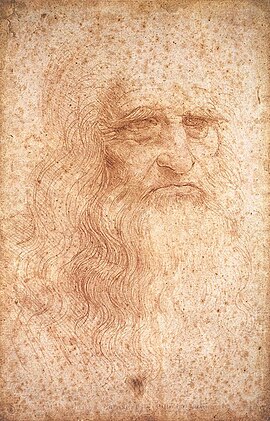
Leonardo da Vinci's "Presumed self-portrait" offers insight into his artistry and self-perception.
Italy
Art
4 min read
Updated By: History Editorial Network (HEN)
Published:
Updated:
Leonardo da Vinci, an influential polymath of the Renaissance period, created an artwork commonly referred to as the "Presumed self-portrait," which is now housed in the Royal Library of Turin, Italy. The sketch, which is believed to depict a bearded, elderly man, is crafted in red chalk and showcases Leonardo's skilled hand and acute attention to detail. This piece provides valuable insight into Leonardo's self-perception and artistic prowess during his later years.
Leonardo's contributions span various fields, including art, science, anatomy, engineering, and architecture. His innovative techniques and in-depth studies have had a lasting influence on both his contemporaries and future generations. The "Presumed self-portrait" holds particular significance as it is one of the few potential representations of Leonardo himself, offering a glimpse into the visage of the man behind some of history's most renowned works, such as the Mona Lisa and The Last Supper.
The impact of this drawing extends beyond its artistic merit; it serves as a critical primary source for historians and scholars studying Leonardo's life and work. It also plays a role in discussions about the authenticity and verification of historical artifacts, as debates continue regarding whether this drawing is indeed a representation of Leonardo.
Despite the disputes about its authenticity, the sketch remains an important piece within the collection of the Royal Library in Turin, attracting attention from art historians, enthusiasts, and the general public alike. It stands as a testament to Leonardo's legacy and the enduring intrigue surrounding his enigmatic persona.
#LeonardoDaVinci #RenaissanceArt #SelfPortrait #RoyalLibraryOfTurin #ArtHistory #MoofLife
Explore the Life Moments of
 AI Twin