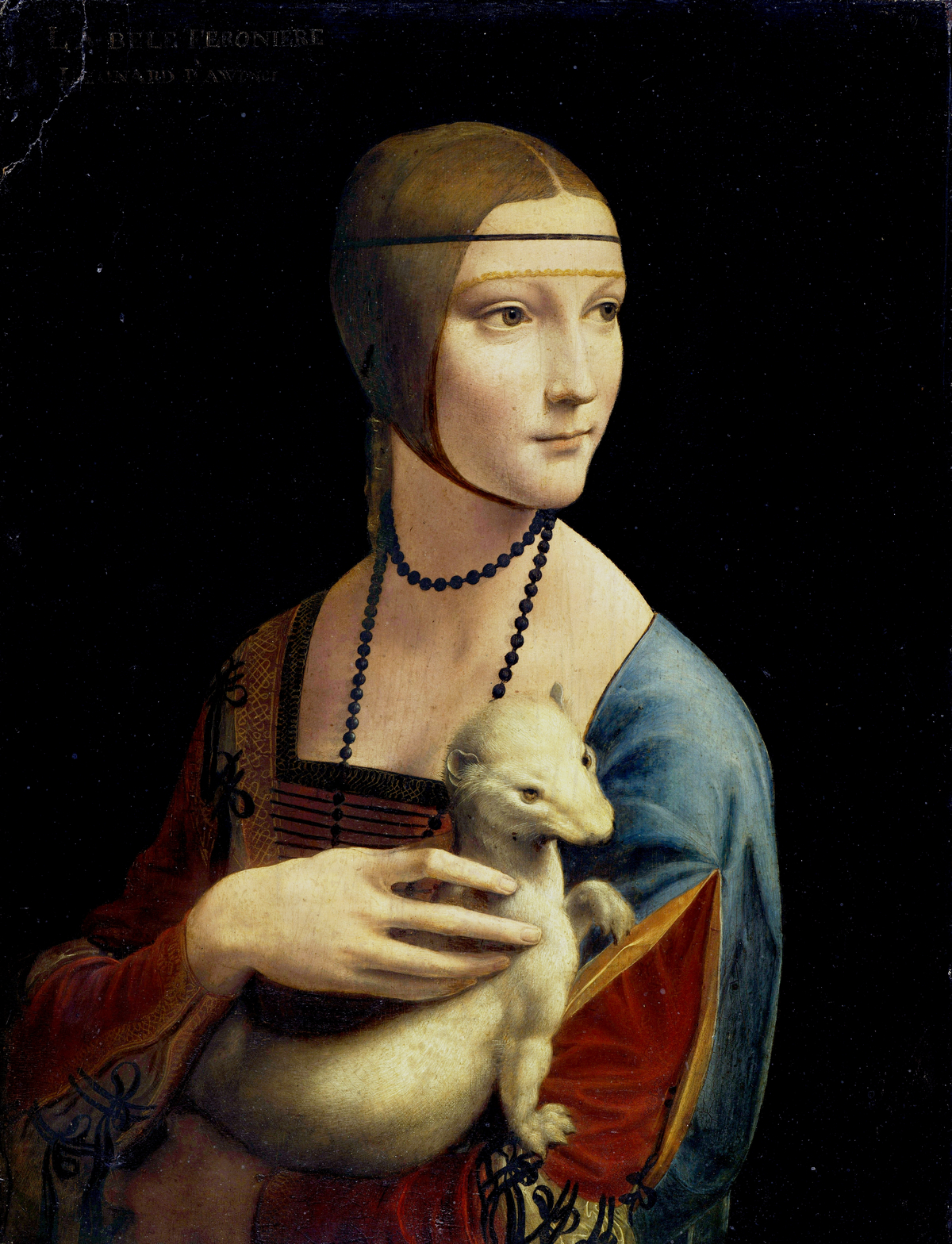
Leonardo da Vinci's Masterpiece: Lady with an Ermine as a Symbol of Renaissance Elegance.
Italy
Art Renaissance Art
4 min read
Updated By: History Editorial Network (HEN)
Published:
Updated:
Leonardo da Vinci created the artwork Lady with an Ermine, portraying Cecilia Gallerani, who was known to be the lover of Ludovico Sforza, the Duke of Milan. The painting was completed during Leonardo's time working under the patronage of Ludovico Sforza. Cecilia Gallerani was a highly educated and cultured woman of the court, and her association with Ludovico positioned her as a significant figure in Milanese society.
The work itself is a half-length portrait of Cecilia, holding an ermine, which is symbolically rich. The ermine can represent purity and moderation or be a subtle reference to Ludovico, who was nicknamed "Ludovico il Moro" and had insignia often associated with the ermine. This commission reflects the intertwined nature of art, politics, and personal relationships in Renaissance Italy.
Leonardo's technique in this painting showcases his skill in rendering realistic textures and his interest in capturing the psychological depth of his subjects. The painting is notable for its composition and the lifelike representation of both Cecilia and the ermine, reflective of Leonardo's keen observation and innovative methods.
Lady with an Ermine has had a lasting impact in the art world and is considered one of Leonardo's masterpieces. It remains a testament to his ingenuity and his contribution to Renaissance art. The painting is housed in the Czartoryski Museum in Kraków, Poland.
#LeonardoDaVinci #RenaissanceArt #CeciliaGallerani #LudovicoSforza #ArtHistory #MoofLife
Explore the Life Moments of
 AI Twin