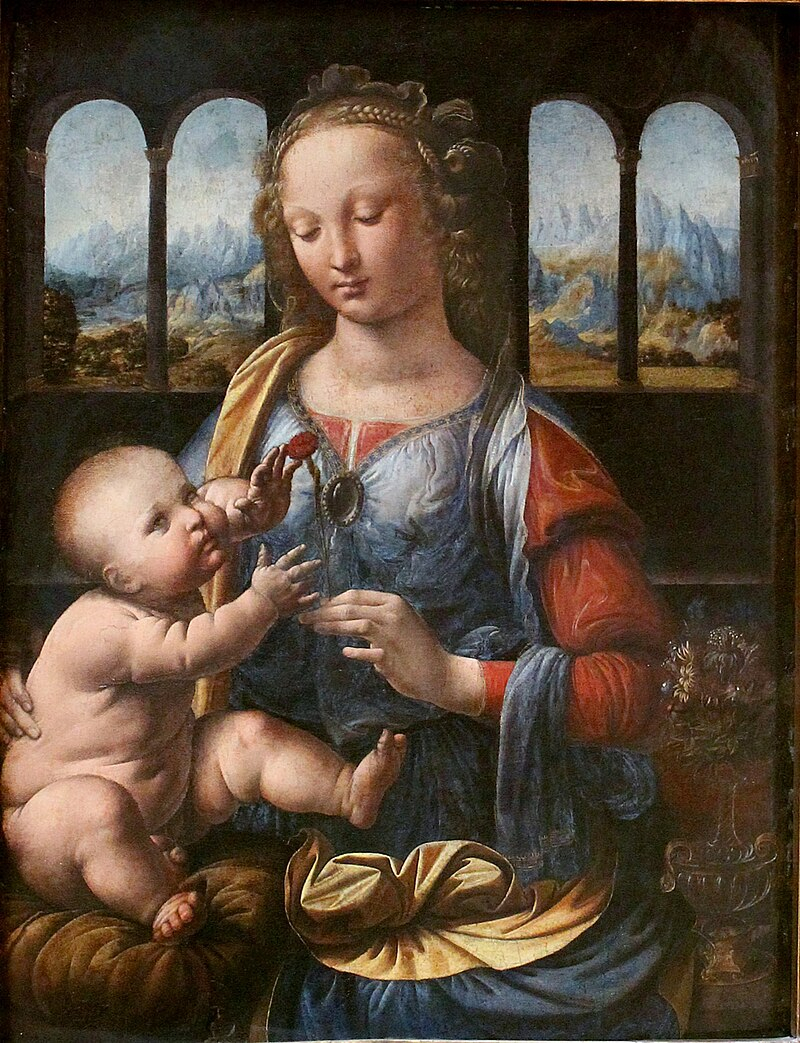
Leonardo da Vinci's "Madonna of the Carnation" showcases his early artistry and innovative techniques.
Italy
Art
4 min read
Updated By: History Editorial Network (HEN)
Published:
Updated:
Leonardo da Vinci, a polymath of the Italian Renaissance, painted "Madonna of the Carnation" during the period of 1472-1478. The artwork is currently housed in the Alte Pinakothek museum in Munich. Born in Vinci, Italy, Leonardo trained under the renowned artist Andrea del Verrocchio in Florence, where he developed his techniques in various artistic disciplines.
"Madonna of the Carnation" represents one of Leonardo’s early works and showcases his developing style. The painting depicts the Virgin Mary holding the Christ Child, with a carnation flower in her hand. This iconography integrates religious symbolism; the carnation is often considered a symbol of divine love and suffering. The use of chiaroscuro in the painting indicates Leonardo's experimentation with light and shadow to create three-dimensionality on a two-dimensional plane.
Leonardo's approach involved meticulous observation and an innovative use of mediums, which set the groundwork for his contributions to art and science. This period marked his initial phase of integrating detailed anatomical studies, which he would continue to pursue throughout his career. "Madonna of the Carnation" exemplifies his ability to blend serene human emotion with a naturalistic background, contributing significantly to Renaissance art's progression.
The impact of this painting is evident as it reflects Leonardo's early mastery, which would later influence his contemporaries and future generations. The work remains significant in art history, illustrating the combination of artistic skill and intellectual exploration that defined Leonardo's oeuvre.
#LeonardoDaVinci #RenaissanceArt #MadonnaOfTheCarnation #ArtHistory #MoofLife

Explore the Life Moments of
 AI Twin