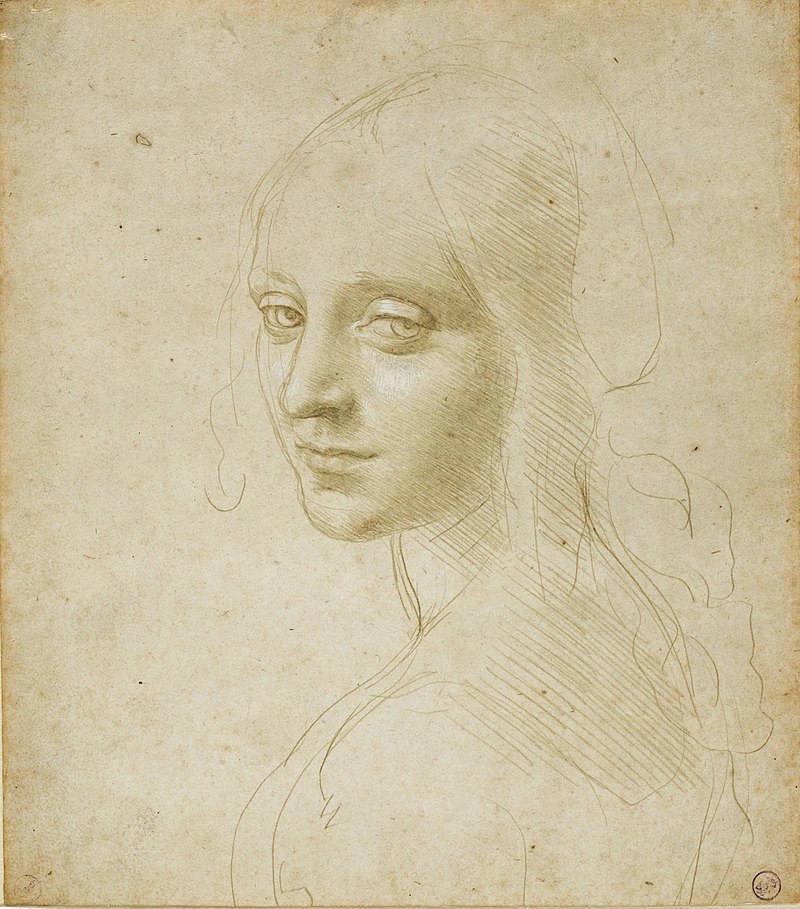
Leonardo da Vinci's "Head of a Woman": An influential blend of art and scientific study.
Italy
Art
Science
4 min read
Updated By: History Editorial Network (HEN)
Published:
Updated:
Leonardo da Vinci undertook the creation of "Head of a Woman," held in the Royal Library of Turin. This drawing, using silverpoint and white highlights on prepared paper, showcases his transition towards exploring the human form through detailed observation and intricate technique. As part of his studies, Leonardo focused on the structure of the human head, embracing a realistic and anatomical approach rather than idealized imagery. His deep examination of features like the intricate curls of hair and delicate expressions in the eyes displayed his commitment to capturing life-like depictions.
Leonardo's technique of silverpoint was a method that required meticulous precision. The medium allowed for fine lines which contributed to the detailed texture and depth. The drawing marks a period where Leonardo was deeply involved in research on anatomy, influenced by his opportunity to dissect human bodies. This confluence of art and science is evident in "Head of a Woman," representing both an artwork and a study useful for his various projects and inventions.
The impact of this work extended well beyond its creation. It influenced the Renaissance art movement by highlighting the importance of blending artistic skill with scientific inquiry. Leonardo's method of detailed study and drawing would inspire his contemporaries and subsequent generations of artists. The focus on human anatomy and its accurate depiction became a critical aspect of Renaissance art.
"Head of a Woman" now resides in the Royal Library of Turin, serving as a testament to Leonardo's profound impact on art and science. The piece continues to attract scholars and artists who study Leonardo's techniques and insights.
#LeonardoDaVinci #HumanAnatomy #ArtAndScience #RenaissanceArt #MoofLife

Explore the Life Moments of
 AI Twin