Leonardo da Vinci's 'Aerial Screw' Sketch: Imaginative Leap in Flight Technology
Italy
Technology
Science
4 min read
Updated By: History Editorial Network (HEN)
Published:
Updated:
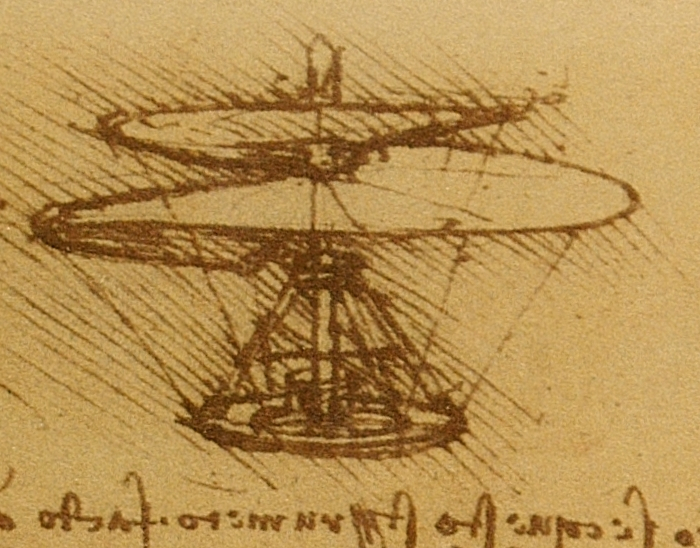
Leonardo da Vinci's creation of the sketch known as the 'aerial screw' is documented in his collection of writings and drawings called the Codex Atlanticus. This notebook comprised a range of Leonardo's studies in various fields, including architecture, anatomy, and flight. The 'aerial screw' is an idea for a flying machine that operates based on the principles of rotational lift. Leonardo envisioned a machine with a helical rotor made of reeds, linen, and wire. The sketch illustrates a device that could have been operated by four men, turning the helical rotor to compress air, theoretically achieving flight through this mechanism.
Leonardo's interest in flight was sparked by his observations of birds and their elegant flight patterns. He aimed to replicate these natural phenomena through human engineering. Although the 'aerial screw' was never built or tested in Leonardo's time and remains speculative due to the lack of necessary materials and understanding of aerodynamics, it represents an important imaginative leap toward the concept of vertical flight.
The impact of Leonardo's work on later technological advancements is evident. His designs inspired future engineers and pioneers of aviation. The 'aerial screw,' while not operational in its original conception, prefigured the development of helicopters, which utilize similar principles. Among Leonardo’s many contributions to science and art, this early exploration of flight technology stands as a testament to his inventive genius and the enduring quest for human flight.
#LeonardoDaVinci #AviationHistory #CodexAtlanticus #HelicopterOrigins #Innovation #HumanFlight #MoofLife
Explore the Life Moments of
 AI Twin