Prime Minister Resigns Amid Economic Protests
Lebanon

Political
Economic Downturn
5 min read
Updated By: History Editorial Network (HEN)
Published:
Widespread protests erupted in Lebanon due to increasing discontent with the government's handling of economic issues, culminating in the resignation of Prime Minister Saad Hariri. The discontent among the Lebanese public had been building up over several years, driven by a faltering economy, increasing public debt, and widespread perceptions of corruption among the ruling elite.
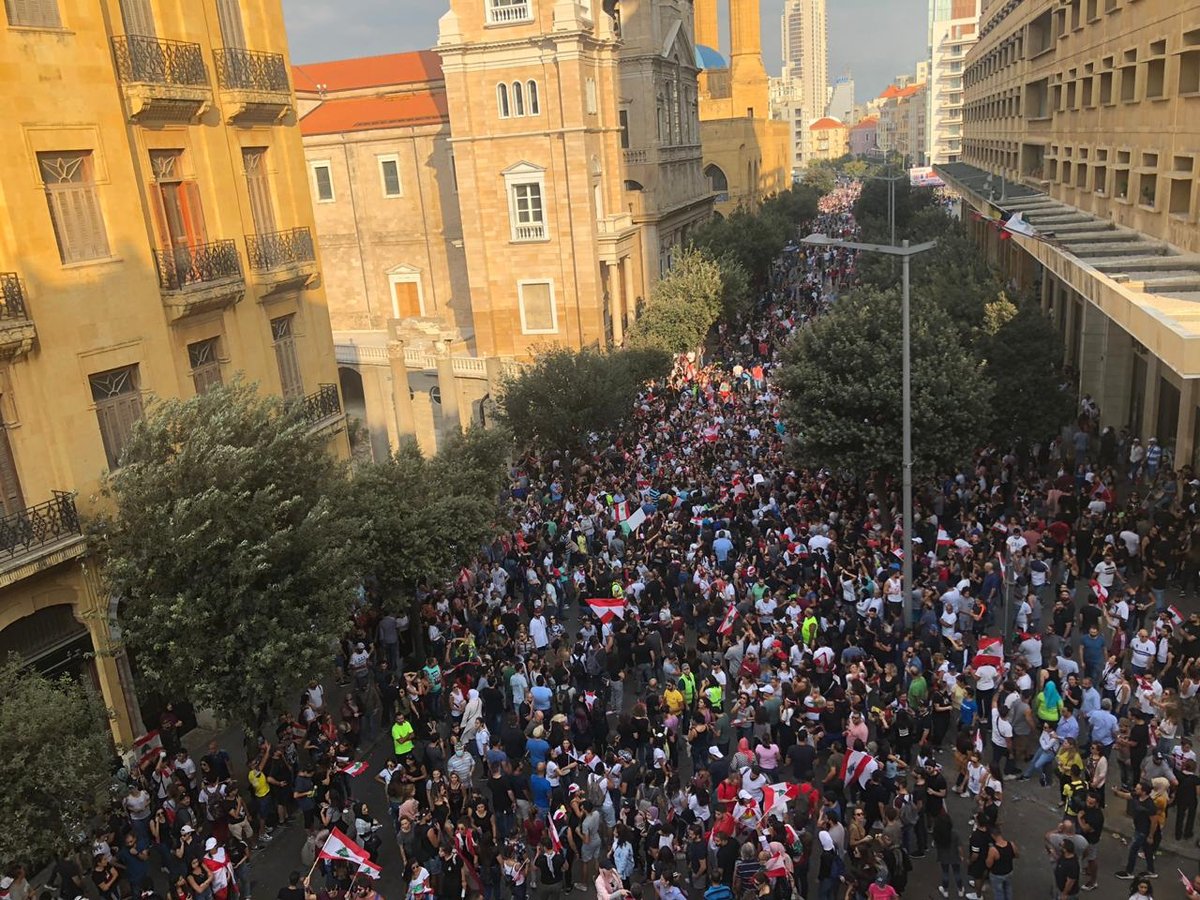
The trigger for the protests was a government announcement to impose new taxes, including a tax on VoIP (Voice over Internet Protocol) services such as WhatsApp. This announcement was met with immediate backlash and sparked a series of demonstrations across the country. Protesters from various socioeconomic backgrounds took to the streets in cities such as Beirut, Tripoli, and Sidon, expressing frustration and demanding the government's resignation and a complete overhaul of the political system.
The demonstrations quickly gathered momentum, with tens of thousands of people participating. Public and private sectors were affected as schools, banks, and businesses shut down in solidarity or out of necessity due to the roadblocks and strikes. The protesters' demands extended beyond the economic reforms initially sought, calling for accountability and the end of what they saw as an entrenched system of political patronage.
In response to the protests, Prime Minister Saad Hariri presented a reform package that included significant cuts to ministerial salaries, measures to combat corruption, and a plan to modernize the country’s infrastructure. However, these measures failed to quell public anger. Demonstrations persisted, and the pressure on the government mounted.
The Lebanese Army and security forces were deployed to manage the crowds and maintain order. Despite some confrontations, the protests remained predominantly peaceful. Eventually, facing sustained public pressure and seeing no viable alternative, Prime Minister Saad Hariri announced his resignation.
Hariri's resignation marked a significant moment in Lebanese politics, suggesting a turning point driven by widespread popular mobilization. It highlighted deep-seated issues within Lebanon's political and economic systems and the growing power of civil society movements. The developments were widely covered in international media, drawing attention to the broader regional implications.
#LebanonProtests #EconomicCrisis #PoliticalChange #CivilSociety #MoofLife
Primary Reference
Lebanon's Saad Hariri resigns amid massive anti-government protests

Explore the Life Moments of
 AI Twin