Incorporation into Byzantine Empire after Roman Empire split
Lebanon
Cultural Exchange
6 min read
Updated By: History Editorial Network (HEN)
Published:
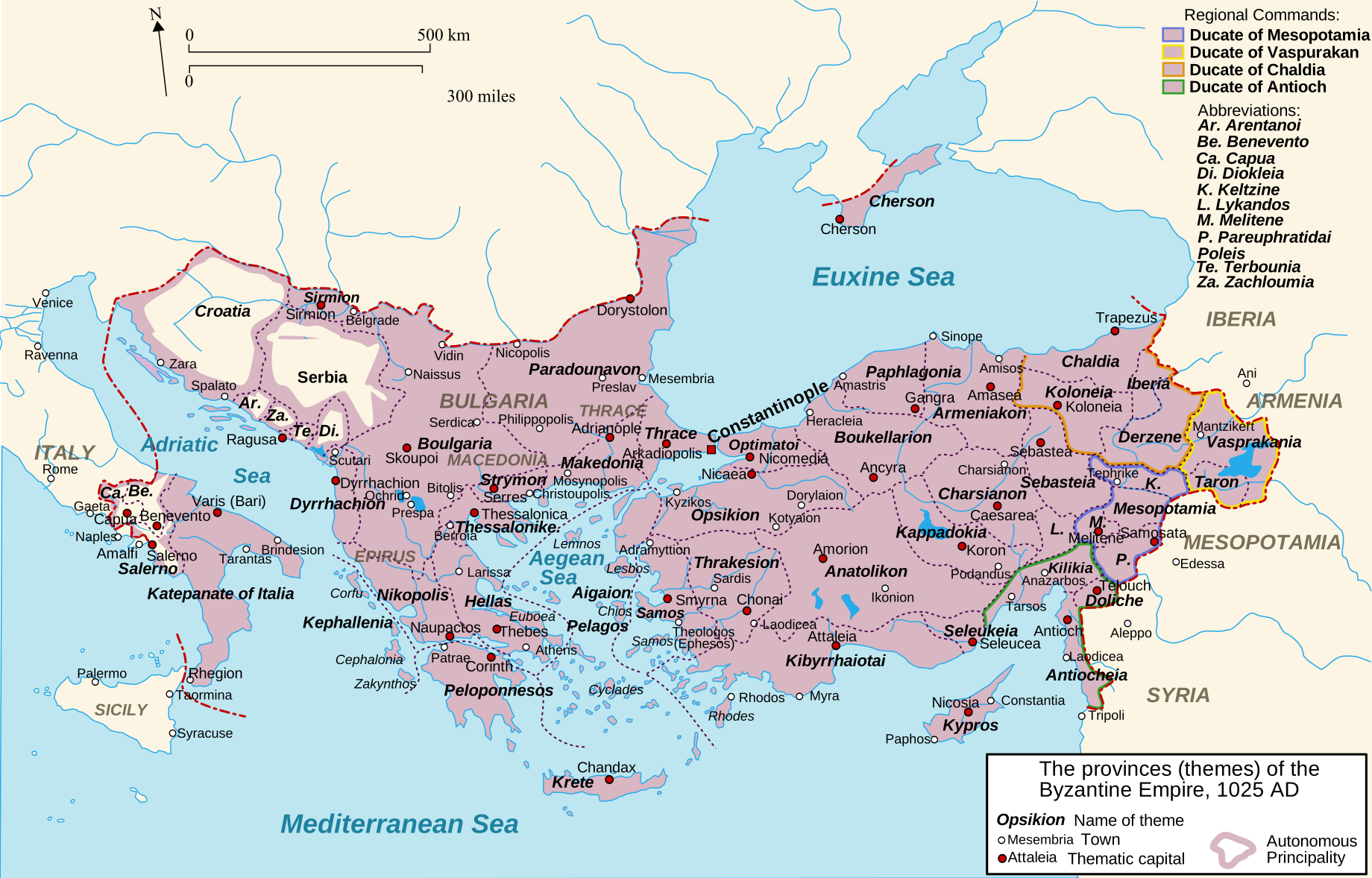
After the division of the Roman Empire, the Eastern Roman Empire, commonly referred to as the Byzantine Empire, inherited the territories of the Levant, including what is present-day Lebanon. This geopolitical realignment followed a strategic division aimed at enhancing administrative efficiency and consolidating military defense mechanisms. The Byzantine Empire emerged as a stronghold with its capital in Constantinople, demonstrating significant advancements in law, military organization, and culture.
Lebanon's inclusion into the Byzantine realm meant it became part of a well-organized bureaucratic system. Governance was marked by a hierarchical structure, where provinces were managed by appointed officials ensuring efficient tax collection, law enforcement, and civic administration. One substantial impact of this incorporation was the spread of Christianity, which solidified the region's religious transformation initiated earlier under the rule of Constantine I. Byzantine efforts led to the construction of numerous churches and the establishment of monastic communities, framing the region's religious landscape for centuries to come.
Economically, Lebanon, particularly its coastal cities such as Beirut and Tyre, benefited from being integral nodes in Byzantine trade networks. They thrived as conduits for commerce between Europe, Asia, and Africa, exporting commodities like timber, glassware, and the renowned Tyrian purple dye. The region experienced a relative period of stability and prosperity, although intermittent conflicts with the Sassanian Empire posed continual challenges.
Culturally, Byzantine influence was instrumental in fostering an environment where arts, literature, and architecture could flourish. Palestinian dialects of Aramaic were spoken alongside Greek, evidencing a linguistic blend that reflected the region’s diverse population. This era also saw the transcription of significant literary works and the rise of notable scholars who contributed to the intellectual heritage of the Byzantine Empire.
Transitioning into the Byzantine domain also brought strategic military significance to Lebanon, with fortifications constructed to defend against external threats, highlighting the region's tactical value in broader imperial defense plans. These fortifications were part of a wider network designed to protect against incursions, which included not only garrisons but also watchtowers and walls.
Overall, Lebanon's integration into the Byzantine Empire represented a period of significant administrative, cultural, and economic development. Its legacy was woven into the broader tapestry of Byzantine achievements and challenges, establishing a foundation for future historical trajectories in the Levant.
#ByzantineEmpire #LebanonHistory #CulturalExchange #TradeNetworks #ReligiousHeritage #AdministrativeChanges #MilitaryStrategy #MoofLife
Primary Reference
History < Fairfield University

Explore the Life Moments of
 AI Twin