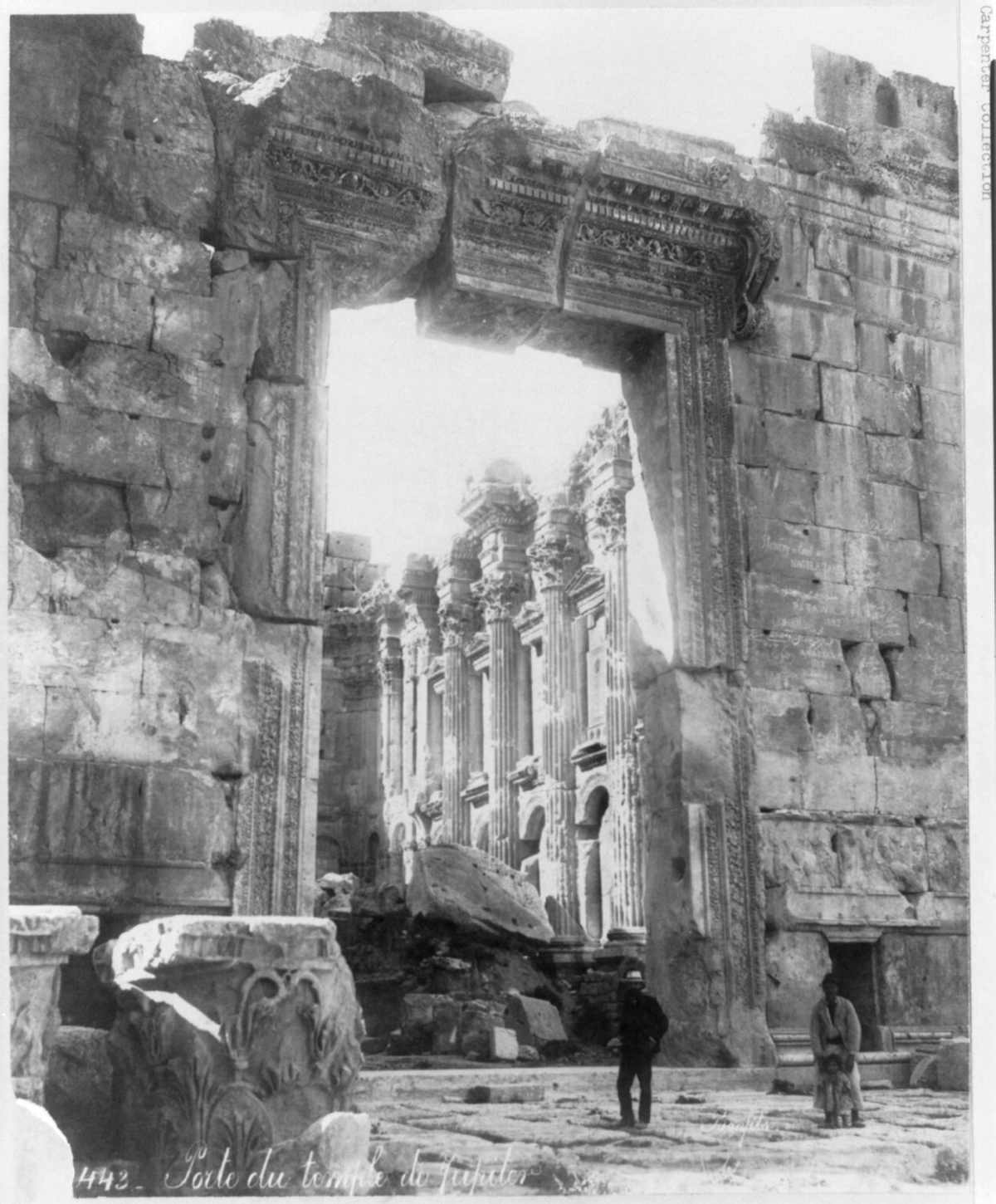
Ancient temple construction in Baalbek's ruins.
Lebanon
Cultural Heritages
5 min read
Updated By: History Editorial Network (HEN)
Published:
The moment known as the Construction of the Temple of Jupiter in Baalbek unfolded during a period of expansive Roman influence. Baalbek, located in modern-day Lebanon, was a religious and cultural hub. The construction of this grandiose temple was initiated as part of a broader architectural endeavor that sought to solidify Roman presence and their gods' significance in the eastern territories.
Baalbek, or Heliopolis as it was referred to by the Romans, held a strategic position both geographically and economically, lying on the trade routes connecting the Mediterranean to the hinterlands of Syria. The temple itself was designed to honor Jupiter, the king of the Roman deities, and it became one of the largest temples dedicated to him in the Roman world.
The project was marked by its ambition and scale. Engineers and architects brought from across the Empire employed advanced construction techniques. Enormous limestone blocks, some weighing up to 800 tons, were transported from nearby quarries. Columns reaching heights of nearly 20 meters stood as testaments to Roman engineering prowess.
The construction of the Temple of Jupiter had far-reaching impacts not only on Baalbek but also on the surrounding regions. The temple became a major pilgrimage site, attracting visitors from across the Roman Empire. This influx of pilgrims and the associated economic activities stimulated local economies and urban development. The temple complex also included other structures like the Temple of Bacchus and the Temple of Venus, forming one of the most elaborate religious complexes in the Roman world.
The influence extended beyond the economic sphere, embedding Roman religious practices within local traditions. It facilitated the blending of Roman and indigenous cultures, contributing to a unique cultural synthesis that defined the region's identity for centuries.
Today, the temple's ruins stand as a testimony to Roman architectural and engineering ingenuity. The site continues to draw scholars, tourists, and history enthusiasts, intrigued by the remnants of one of antiquity's most remarkable constructions.
#MoofLife #Baalbek #RomanEmpire #TempleOfJupiter #CulturalHeritage #AncientEngineering
Primary Reference
Two amazing days in transit in Beirut – TRAVELLING THE WORLD ...

Explore the Life Moments of
 AI Twin