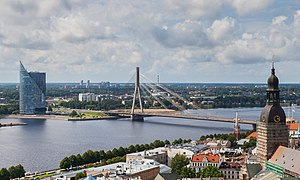
Vanšu Bridge: Symbol of Infrastructure Advancement in Riga, Latvia.
Latvia
Infrastructure
Development
4 min read
Updated By: History Editorial Network (HEN)
Published:
The Vanšu Bridge, spanning the Daugava River in Riga, came into operation, marking a pivotal advancement in Latvia's infrastructure. It was an engineering achievement that greatly enhanced connectivity between the city’s left and right banks. The bridge stretches over 590 meters, designed with a cable-stayed structure that features a single 109-meter-high pylon. This construction not only facilitated smoother traffic flow but also spurred economic development in the surrounding regions, catalyzing urban growth and modernizing the transport system.
Prior to its inauguration, the city of Riga faced logistical challenges, with only a limited number of bridges accommodating the transportation demands across the Daugava River. The implementation of Vanšu Bridge alleviated much of this congestion, significantly reducing travel time for commuters. It became an essential conduit, linking residential areas with commercial and industrial zones, thereby improving the quality of life for many inhabitants.
Moreover, the bridge's design and construction reflect a collaborative effort that involved local and international expertise, highlighting the growing global interconnectedness in engineering practices. Its completion is seen as a testament to Latvia's progress in infrastructure development during the late 20th century.
Over the years, Vanšu Bridge has not only been a vital transport link but has also gained symbolic status, representing Riga's ambition and capability in architectural and engineering domains. The bridge stands as a landmark, drawing both locals and tourists, and it plays a crucial role in the city's aesthetics and urban landscape.
#Architecture #Infrastructure #Engineering #Riga #VanšuBridge #DaugavaRiver #UrbanDevelopment #Transport #MoofLife
Primary Reference
Vanšu Bridge - Wikipedia

Explore the Life Moments of
 AI Twin