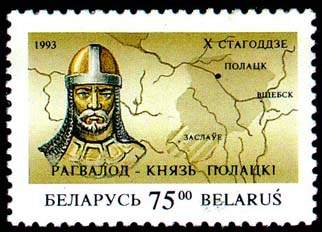
Norse Prince Ragnvald's conquest and establishment of power at Polotsk in 10th century Europe.
Latvia
Political
Global Trade
4 min read
Updated By: History Editorial Network (HEN)
Published:
In the mid-10th century, the Norse prince Ragnvald (Rogvolod of Polatsk) embarked on a military campaign, sailing from across the seas to challenge the existing power structures along the Daugava River. His military expedition led to the systematic subjugation of various hillforts on both sides of the river. This wave of conquest culminated in the establishment of his capital at Polotsk, solidifying his control over the region.
Ragnvald, hailing from a Norse lineage, leveraged superior maritime skills and strategies familiar to Viking raiders to dominate the local Balts and Slavs. The strategic choice of Polotsk as the capital allowed Ragnvald to control vital trade routes that connected to the Baltic Sea and deeper into the Northern European hinterlands. His establishment of a centralized administrative center at Polotsk marked a significant shift in local governance, aligning more closely with the emerging state structures characteristic of the time.
The impact of Ragnvald's conquests led to increased integration of the local economy into broader commercial networks. The control of the Daugava River enabled secure passage for merchants and facilitated economic stability and growth in Polotsk. Furthermore, the cultural impact was significant; the introduction of Norse customs and interactions with local Slavic traditions created a distinctive cultural and political milieu in the region.
These events contributed substantially to the development of Polotsk as an influential principality in Eastern Europe. Over time, Polotsk evolved into a hub of political power, trade, and culture, laying foundational aspects for future regional dynamics.
#MoofLife #Polatsk #NordicConquests #DaugavaRiver #LatviaHistory #RaidersToRulers #HistoricalImpact #TradeRoutes #CulturalIntegration
Explore the Life Moments of
 AI Twin