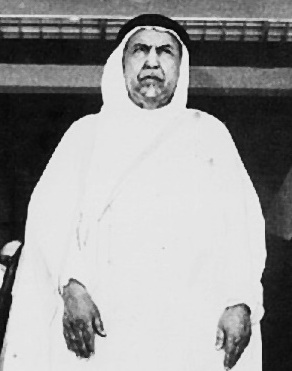
Emir dissolves National Assembly, political tension rises.
Kuwait
Political
Global Trade
5 min read
Updated By: History Editorial Network (HEN)
Published:
In a pivotal moment for Kuwait, Emir Sheikh Sabah Al-Salim Al-Sabah took the decisive step of dissolving the National Assembly. This decision came against a backdrop of increasing political friction and escalating tensions within the Assembly, which comprised 50 elected members. The body, introduced in the early 1960s following the initiation of the Kuwaiti Constitution, was instrumental in shaping the nation's legislative framework.
The Emir's dissolution of the National Assembly aimed to address the ongoing conflict between the legislative and executive branches of the government. Members of the Assembly had raised significant concerns over issues such as economic policy, political freedoms, and governance. However, the Emir's move was seen by some as an attempt to centralize control and manage these disputes more effectively.
The impact of dissolving the National Assembly was profound. It led to a period marked by political uncertainty and public unrest. Ordinarily robust political debates were transferred from the neutral territory of parliamentary halls to less controlled public arenas, which amplified societal tensions. Observers and historians note that the dissolution significantly shaped the subsequent political dynamics and governance approaches in Kuwait. Many saw this as a clear turning point in the balance of power, which favored the executive branch.
While the government maintained that this consolidation of power was necessary for national stability and security, critics both domestic and international argued that it restricted political freedoms and undermined democratic principles. This balance of perspectives epitomized the complex political landscape in Kuwait at the time.
For Kuwait’s economy, reliant on its substantial oil reserves, these political actions also had implications. Investor confidence fluctuated as questions arose over the medium-term stability of Kuwait’s political environment. Nonetheless, the Emir's decision, and the period that followed, underscored the broader global tensions of the time, where governance and control were continually negotiated spaces.
The dissolution of the National Assembly remains a critical episode in Kuwait's political history, capturing the complexities of governance within an evolving political framework.
#EmirSheikhSabahAlSalim #NationalAssemblyDissolution #PoliticalTension #KuwaitPolitics #MoofLife

Explore the Life Moments of
 AI Twin