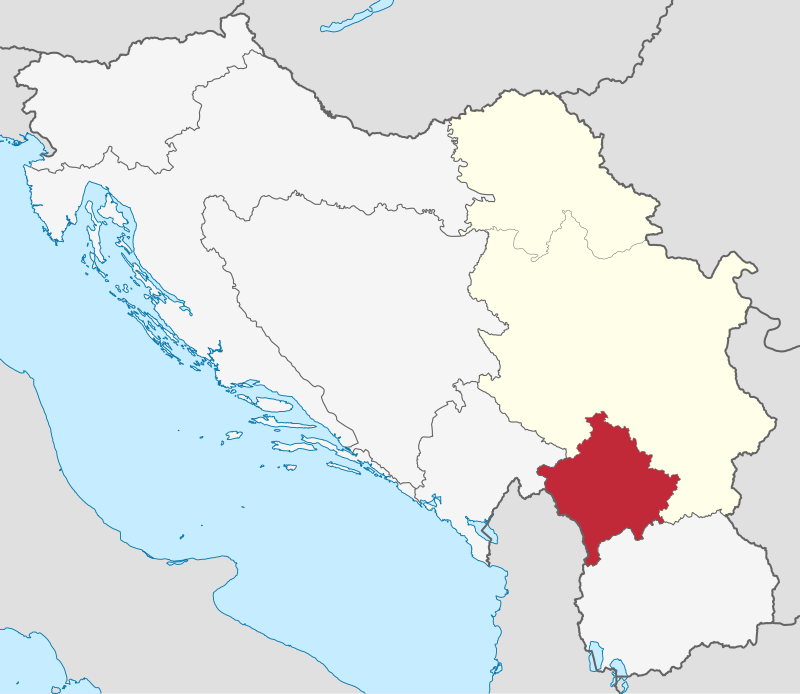
Yugoslav Constitution Grants Kosovo Autonomy: Reforms Elevate Region's Status and Representation

Political
Global Trade
5 min read
Updated By: History Editorial Network (HEN)
Published:
Updated:
The Yugoslav Constitution granted Kosovo major autonomy, allowing the region its own administration and representation in the federal presidency. This constitutional change occurred within the framework of the Socialist Federal Republic of Yugoslavia (SFRY), which aimed to create a balance between the diverse ethnic groups within the federation.
Prior to this change, Kosovo had been an autonomous province within the Socialist Republic of Serbia but without substantial administrative power. The new constitutional provisions elevated Kosovo's political status. The Autonomous Province of Kosovo now had its own administrative apparatus and an increased role in federal decision-making processes, marking a significant shift in the internal political dynamics of Yugoslavia. This move was intended to address the growing demands for greater local governance by the Albanian majority in Kosovo, who were seeking recognition of their distinct identity and rights.
This expanded autonomy included the power to formulate local laws, manage economic resources, and participate in federal institutions. Kosovo gained representation in the eight-member rotating federal presidency, which was responsible for the collective head of state functions of Yugoslavia. This reform was part of a broader decentralization process, seeking to provide equitable regional governance across the diverse federation.
The impact of the constitutional changes was multifaceted. On the one hand, it recognized the demographic and cultural uniqueness of Kosovo, creating a platform for better local governance and increased ethnic Albanian involvement in Yugoslav politics. On the other hand, it set precedents for inter-republic relations and ethno-political power distribution across Yugoslavia, eliciting mixed reactions from different ethnic groups within the country.
In statistical terms, the population of Kosovo at the time was predominantly ethnic Albanian, accounting for about 70% of its residents. This demographic fact was a key driver behind the push for greater autonomy, reflecting the local desire for more substantial influence in the regional and federal political spheres. The constitutional change thus represented a pivotal juncture in the evolving political landscape of the SFRY.
#KosovoAutonomy #YugoslavConstitution #PoliticalChange #LocalGovernance #MoofLife

Explore the Life Moments of
 AI Twin