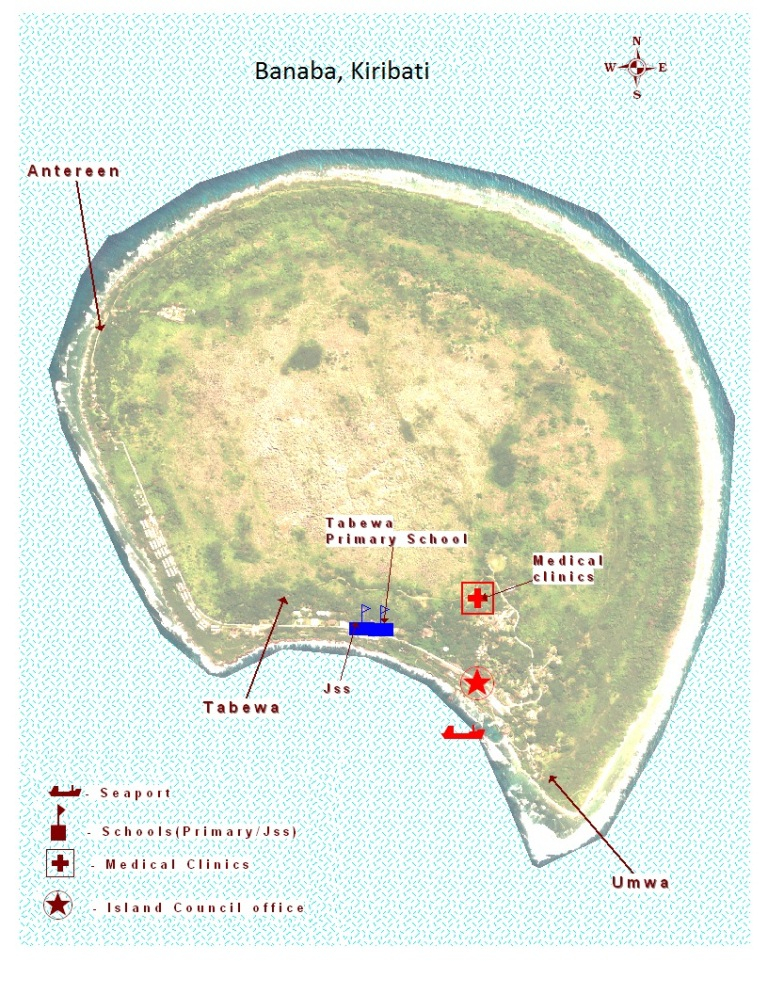
Banaba island was added to the protectorate administered by WPHC
Kiribati
Geography
Colonial Studies
3 min read
Updated By: History Editorial Network (HEN)
Published:
Updated:
In 1900, Banaba, also known to Europeans as Ocean Island, was officially added to the protectorate administered by the Western Pacific High Commission (WPHC). This strategic move was primarily motivated by the discovery of phosphate rock in the island's soil, which was found to be abundant and of high quality. The phosphate mining industry that emerged as a result became a significant source of revenue for the WPHC, contributing to the economic development of the region. The administration of Banaba was initially overseen by a resident commissioner, who operated from various locations including Makin Islands and Betio, Tarawa, before establishing a base on Ocean Island itself in 1908. The phosphate extracted from Banaba not only played a crucial role in the local economy but also had far-reaching implications for agricultural practices globally, as phosphate is a key ingredient in fertilizers. The addition of Banaba to the protectorate marked a pivotal moment in the history of the Western Pacific, highlighting the intersection of colonial interests and natural resource exploitation. This development set the stage for future economic activities and geopolitical dynamics in the region, as the demand for phosphate continued to grow throughout the 20th century. #mooflife #mof #MomentOfLife #Banaba #OceanIsland #WesternPacificHighCommission #PhosphateMining #ColonialHistory
Primary Reference
Banaba

Explore the Life Moments of
 AI Twin