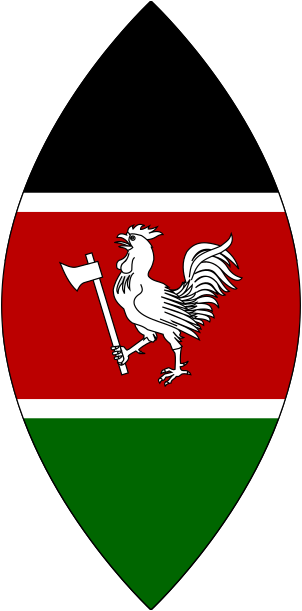
Establishment of Imperial British East Africa Company in East Africa
Colonialism
4 min read
Updated By: History Editorial Network (HEN)
Published:
In the late 19th century, as European powers vied for control over territories in Africa, the British established the Imperial British East Africa Company {IBEAC} to oversee their interests in East Africa. The company was tasked with promoting trade, maintaining order, and advancing British influence in the region.
The IBEAC was granted a royal charter to administer territories in East Africa, including present-day Kenya. With the goal of exploiting the region's resources and expanding British control, the company established trading posts, built infrastructure, and negotiated treaties with local leaders.
The establishment of the IBEAC had a significant impact on the region. It led to the influx of European settlers, the introduction of new technologies and industries, and the imposition of British colonial rule. The company's activities sparked resistance from local communities, leading to conflicts and upheaval in the region.
Despite facing financial difficulties and challenges in governing the vast and diverse East African territories, the IBEAC laid the groundwork for British colonial rule in Kenya. The company's efforts set the stage for the eventual annexation of East Africa by the British government and the establishment of formal colonial administration in the region.
The legacy of the Imperial British East Africa Company {IBEAC} continues to shape Kenya's history and society. The impacts of colonialism, including land dispossession, cultural assimilation, and political divisions, are still felt in the country today. The establishment of the IBEAC marked a pivotal moment in Kenya's history, setting the stage for the country's eventual independence and ongoing struggles for self-determination.
#ImperialBritishEastAfricaCompany #BritishColonialism #KenyanHistory

Explore the Life Moments of
 AI Twin