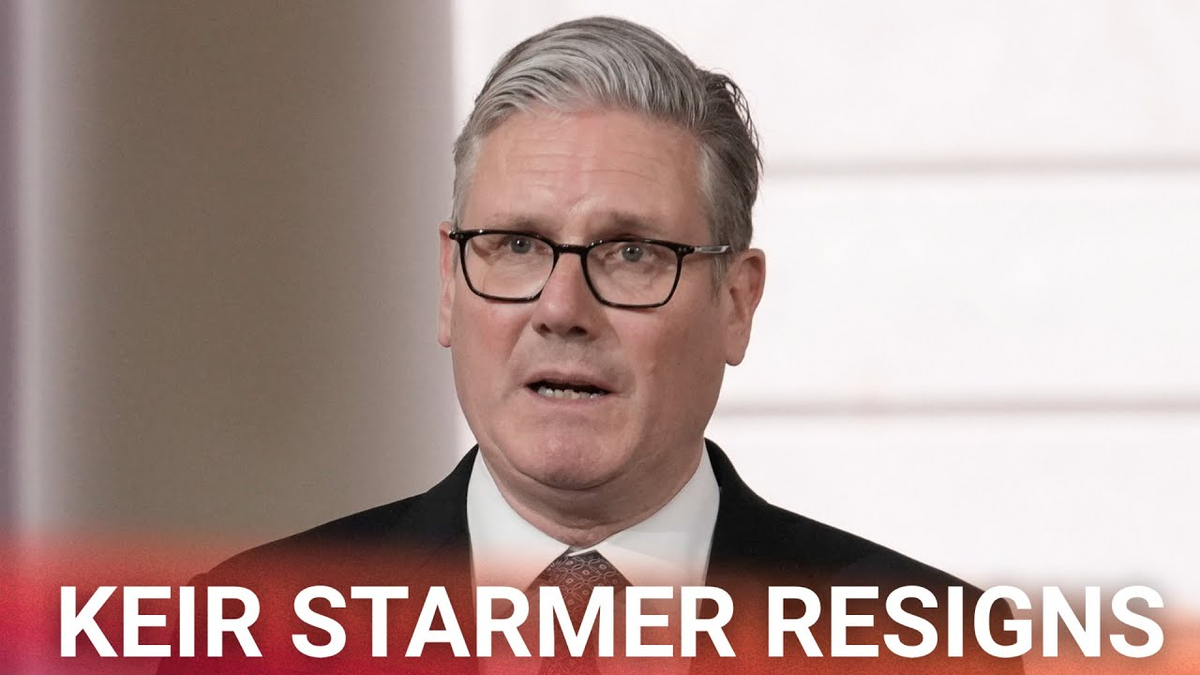
Keir Starmer Resigns as UK Prime Minister Amid Labour Leadership Crisis
London, England, United Kingdom
Political
7 min read
Updated By: History Editorial Network (HEN)
Published:
On 22/06/2026, Keir Starmer announced his resignation as Prime Minister of the United Kingdom and Leader of the Labour Party, bringing his premiership to an end after months of mounting political pressure. Speaking outside 10 Downing Street, Starmer delivered an emotional statement, saying he had concluded he no longer had the confidence of his parliamentary party to continue leading Labour into the future. He confirmed that he would remain as caretaker prime minister until a new Labour leader is elected, ensuring continuity of government during the transition.
Labour's National Executive Committee set out a timetable for the leadership contest, with nominations scheduled to open on 09/07/2026 and a new leader expected before Parliament returns from its summer recess. Almost immediately after Starmer's announcement, Andy Burnham, the former Mayor of Greater Manchester who had recently returned to Westminster through a by election victory in Makerfield, confirmed his intention to seek the Labour leadership. He quickly emerged as the leading candidate, receiving support from several senior Labour figures while other potential contenders chose not to stand.
Starmer's resignation followed a prolonged period of political instability within the governing Labour Party. His authority had been weakened by internal divisions, including cabinet resignations and growing dissatisfaction among Labour MPs. The party also suffered severe setbacks in the May 2026 local elections, losing substantial numbers of council seats and experiencing declining support in several traditional strongholds. Labour also faced increasing competition from Reform UK and the Green Party, adding to pressure on the government.
Several government policies attracted significant criticism during Starmer's final months in office, including the removal of winter fuel payments for many pensioners, increases in payroll related taxation, and changes to inheritance tax affecting family farms. The government was also affected by cabinet controversies and high profile resignations that further undermined confidence in the administration. Together with poor electoral results and internal rebellion, these developments contributed to Starmer's decision to step aside.
According to reports including CNBC, Starmer's departure positioned the United Kingdom to appoint its seventh prime minister in a decade, continuing a period of frequent leadership changes in British politics. Financial markets initially reacted calmly as Labour moved toward an orderly leadership transition while Starmer remained in office until his successor could be formally elected.
Why This Moment Matters: Starmer's resignation came less than two years after Labour's 2024 general election victory and highlighted how quickly political support can shift despite a strong parliamentary majority. The leadership transition also marked another rapid change at the top of British government during a decade characterized by repeated changes in prime ministers and party leadership.
#UnitedKingdom #LabourParty #UKPolitics #PrimeMinister #AndyBurnham #PoliticalLeadership
#KeirStarmer
Primary Reference
UK's Starmer resigns, paving way for orderly transfer of power

Explore the Life Moments of
 AI Twin