First Program to be Captioned for the Deaf Audience
United States of America
Television
Cooking
3 min read
Updated By: History Editorial Network (HEN)
Published:
Updated:
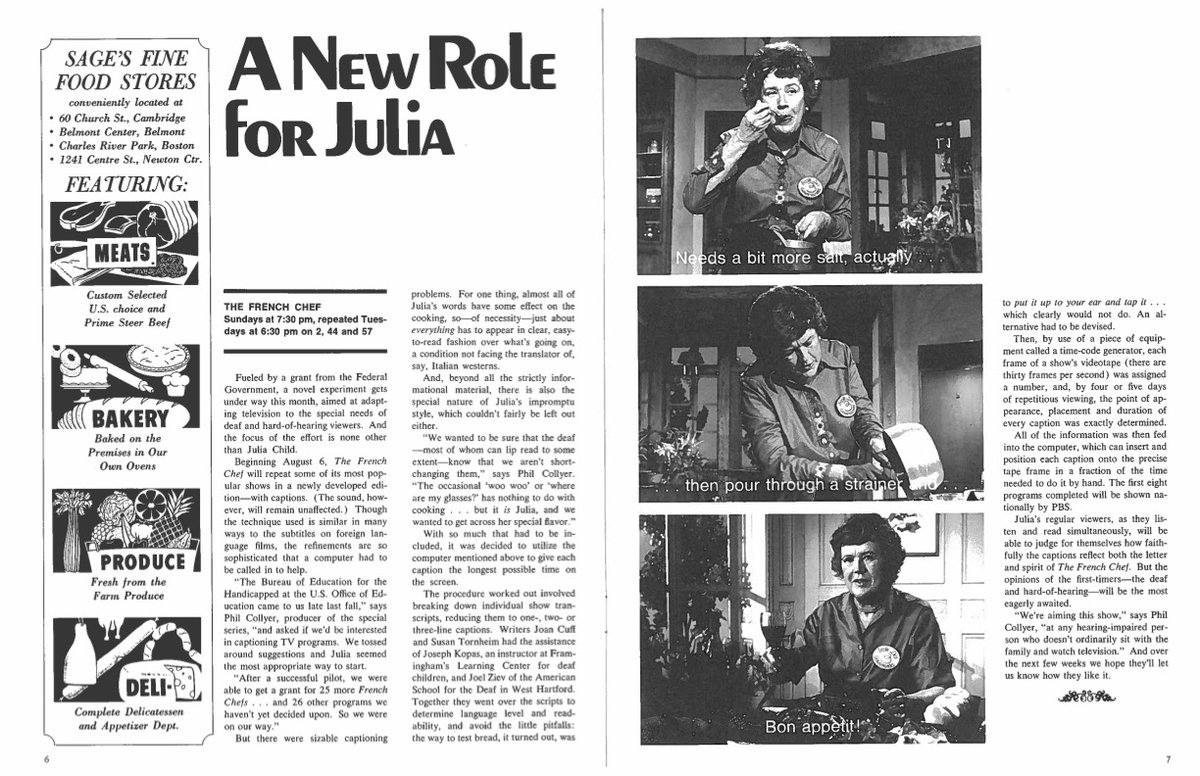
The French Chef marked a pivotal advancement in television accessibility by becoming the first program to be captioned for the deaf audience. This initiative utilized open-captioning technology, which displayed text on the screen to convey dialogue and important sounds, making the content more inclusive for viewers with hearing impairments. The program, hosted by Julia Child, not only showcased culinary techniques but also set a precedent for future television productions to consider accessibility in their programming. The inclusion of captions allowed a broader audience to engage with the content, fostering a sense of community and participation among viewers who were previously marginalized in the realm of television entertainment.
The impact of captioning extended beyond The French Chef, influencing the development of closed captioning technology that would follow. This evolution in broadcasting standards led to increased awareness and advocacy for the rights of individuals with disabilities, particularly in media consumption. As a result, many television networks began to adopt captioning practices, ensuring that programming was accessible to all. The move towards inclusivity in media not only enhanced the viewing experience for the deaf and hard-of-hearing community but also encouraged a more diverse representation in television content, ultimately shaping the landscape of modern broadcasting.
#mooflife
#MomentOfLife
#CaptionedTv
#Accessibility
#TheFrenchChef
#Open-captioning
#JuliaChild

Explore the Life Moments of
 AI Twin