Stalin's Death and the Doctors' Plot
Russia
Politics
4 min read
Updated By: History Editorial Network (HEN)
Published:
Updated:
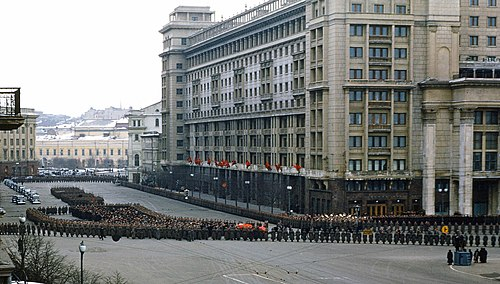
The death of Joseph Stalin marked a pivotal moment in Soviet history, leading to significant political and social changes. Stalin's leadership was characterized by widespread repression, including purges and state-sponsored campaigns against various groups, notably the antisemitic campaign that culminated in the Doctors' Plot. This plot was a fabricated conspiracy alleging that a group of Jewish doctors were attempting to poison Soviet leaders, which intensified the atmosphere of fear and suspicion in the country. Following Stalin's death, Georgy Malenkov initially took over leadership, but the power dynamics shifted as Nikita Khrushchev emerged as a key figure. Khrushchev's rise to power initiated a process of 'de-Stalinization', which aimed to dismantle the oppressive policies of Stalin's regime and address the injustices that had occurred during his rule. This included a reassessment of Stalin's legacy and a reduction in state repression, which had profound implications for Soviet society and governance.
The impact of Stalin's death and the subsequent political shifts were felt across various sectors of Soviet life. The transition in leadership led to a gradual easing of censorship and a more open discussion of political issues, although the fundamental structure of the Communist Party remained intact. The Doctors' Plot, while initially a tool of Stalin's regime to instill fear, became a symbol of the excesses of his rule and was later denounced by Khrushchev. This period also saw a shift in foreign policy, as the Soviet Union began to engage more with the West, albeit cautiously. The legacy of Stalin's death and the events surrounding it continue to influence discussions about Soviet history and the evolution of the Communist Party in the years that followed.
#mooflife
#MomentOfLife
#Stalin'sDeath
#Doctors'Plot
#SovietHistory
#De-stalinization
#GeorgyMalenkov
Primary Reference
Death and state funeral of Joseph Stalin

Explore the Life Moments of
 AI Twin