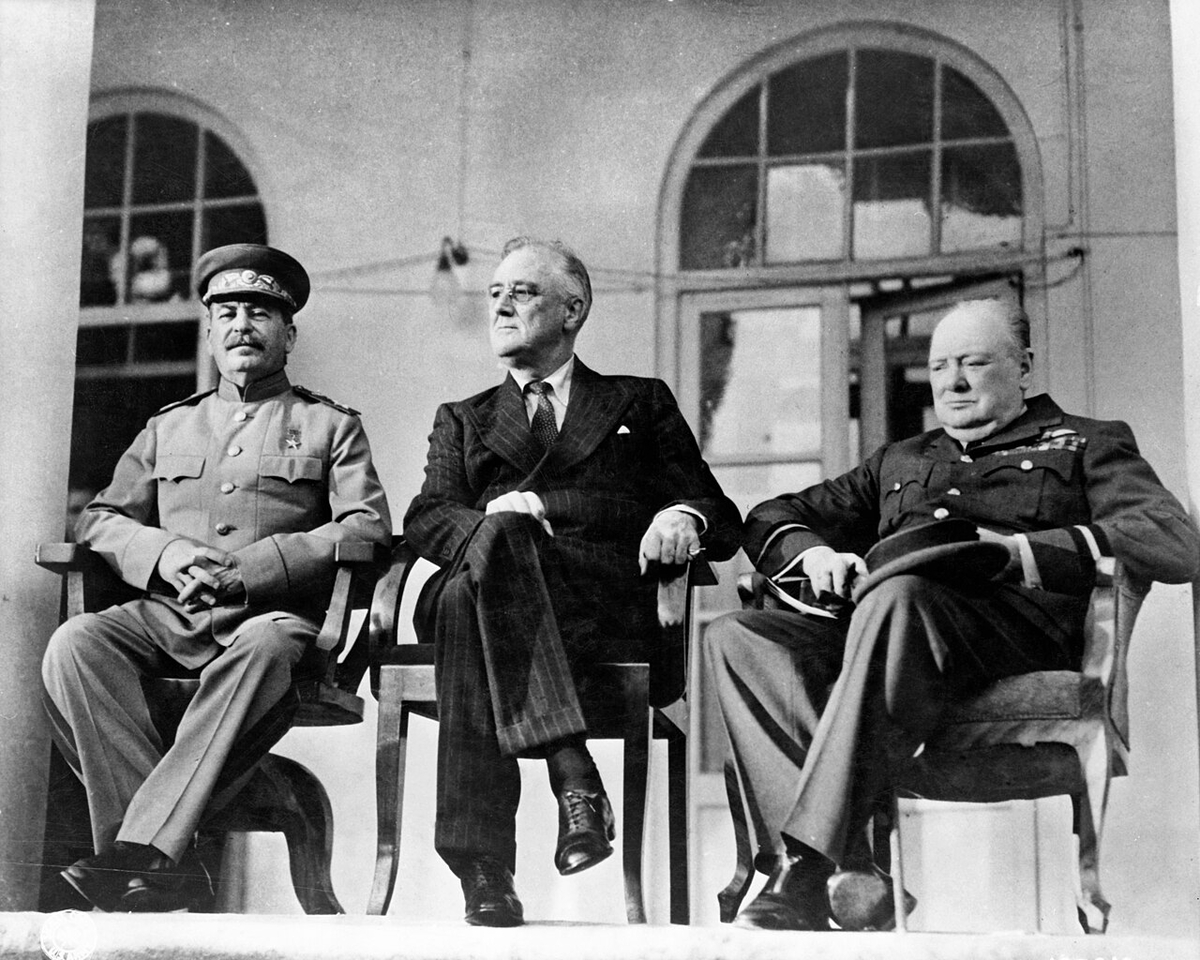
Stalin, Churchill, and Roosevelt's Tehran Meeting
Russia
Politics
World War II
4 min read
Updated By: History Editorial Network (HEN)
Published:
Updated:
The Tehran Conference marked a pivotal moment in World War II, where leaders Joseph Stalin, Winston Churchill, and Franklin D. Roosevelt convened to discuss military strategies and post-war plans. The meeting took place in Tehran, a location chosen by Stalin, and was characterized by a collaborative atmosphere, particularly between Stalin and Roosevelt. Both leaders shared a common interest in the post-war dismantling of the British Empire, reflecting a significant shift in geopolitical dynamics. The discussions focused on the necessity of preventing Germany from regaining military strength, leading to a consensus that the German state should be fragmented to ensure long-term stability in Europe. This agreement underscored the leaders' commitment to a collective approach in addressing the threats posed by Nazi Germany.
The outcomes of the Tehran Conference had lasting implications for the post-war order. The leaders agreed on several key points, including the recognition of Königsberg as Soviet territory, which highlighted the shifting borders in Eastern Europe. The conference also laid the groundwork for future cooperation among the Allies, setting the stage for subsequent meetings and agreements. The decisions made in Tehran not only influenced military strategies but also shaped the political landscape of Europe in the years following the war. The collaboration among the three leaders illustrated the complexities of wartime alliances and the emerging tensions that would later define the Cold War era.
#mooflife
#MomentOfLife
#TehranConference
#StalinChurchillRoosevelt
#WorldWarIi
#AlliedPowers
#Post-warEurope
Primary Reference
Tehran Conference

Explore the Life Moments of
 AI Twin