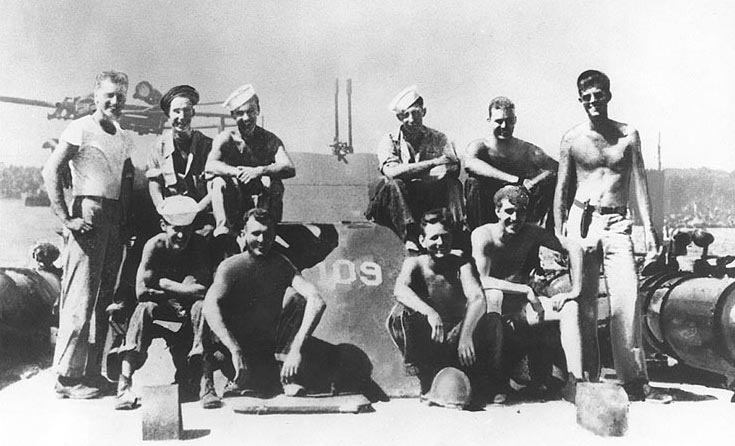
Lieutenant Kennedy's PT-109 Rescue Mission during WWII: A Story of Leadership and Resilience
United States of America
Political
3 min read
Updated By: History Editorial Network (HEN)
Published:
During World War II, Lieutenant John F. Kennedy served as the commander of Patrol Torpedo (PT) boat 109 in the Pacific theater. Kennedy's vessel was involved in a collision with Japanese destroyer Amagiri, resulting in the sinking of PT-109. Kennedy and his crew were stranded in the Solomon Islands.
Kennedy and the surviving crew members swam to a small island approximately 3.5 miles from the wreck, carrying an injured crew member with them. For several days, the stranded crew faced hunger and dehydration. Recognizing the need for urgent rescue, Kennedy swam to neighboring islands, ultimately reaching Naru Island where he encountered two native coastwatchers, Biuku Gasa and Eroni Kumana.
To communicate his situation and request rescue assistance, Kennedy carved a message on a coconut shell: "Nauro Isl commander...native knows posit...he can pilot...11 alive needs small boat...Kennedy." This message was successfully delivered, and soon after, the crew was rescued by the PT-157.
The rescue of PT-109's crew and Kennedy's leadership were widely documented and contributed to his later political career. The carved coconut became a symbol of resourcefulness and resilience.
#MoofLife #WorldWarII #Leadership #RescueMission #PT109 #Kennedy
Primary Reference
John F. Kennedy and PT-109 | JFK Library
Explore the Life Moments of
 AI Twin