Berlin Crisis: Standoff at Checkpoint Charlie, pivotal moment in Cold War tensions.
United States of America
Political
Global Trade
5 min read
Updated By: History Editorial Network (HEN)
Published:
During the Berlin Crisis, a confrontation took place at Checkpoint Charlie between U.S. and Soviet tanks. This standoff became a focal point in the wider geopolitical tension arising from the Berlin Wall's construction, a barrier that divided East and West Berlin. The wall symbolized the ideological divide between the capitalist West led by the United States and the communist East backed by the Soviet Union.
Background to the event was rooted in the post-World War II arrangement of Berlin, where the city was divided into sectors controlled by the victorious Allied powers. Cold War tensions heightened with the Soviet Union's attempts to assert control over Berlin, culminating in the erection of the Berlin Wall. The barrier aimed to prevent East Germans from defecting to the West, exacerbating already fragile relations between the superpowers.
The standoff at Checkpoint Charlie was precipitated by U.S. officials' insistence on their rights to freely access all parts of Berlin, despite East Germany's efforts to regulate movement through the Wall. The situation escalated when U.S. diplomat Allan Lightner was stopped by East German guards. In response, U.S. forces moved tanks to Checkpoint Charlie, a key crossing point, and the Soviets countered by positioning their own tanks just 100 yards away. The two sides faced off for several hours, raising fears of a potential military conflict.
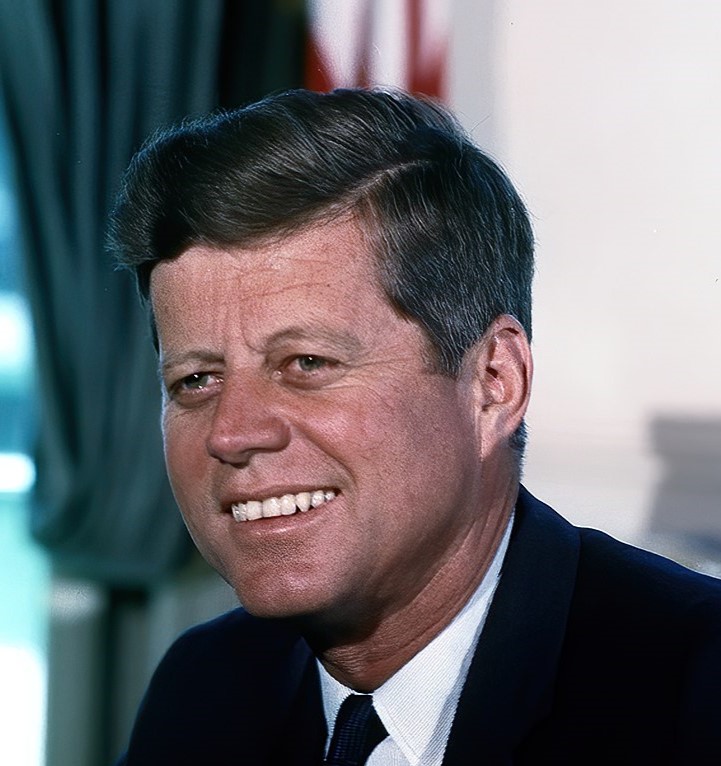
The impact of the event extended beyond Berlin as it underscored the volatility of U.S.-Soviet relations and the possibility of a direct confrontation leading to nuclear war. The standoff was eventually defused through diplomatic channels, including backdoor communications between U.S President John F. Kennedy and Soviet Premier Nikita Khrushchev, but it highlighted the precarious balance of power during the Cold War.
The standoff did not lead to immediate policy changes but reinforced the need for clear communication and protocols to manage Cold War crises. It was a stark reminder of the stakes involved in the ideological struggle between the U.S. and the Soviet Union, with Berlin remaining a flashpoint for future confrontations.
#MoofLife #BerlinCrisis #CheckpointCharlie #ColdWar #US_SovietRelations
Primary Reference
Standoff in Berlin, October 1961 | Article | The United States Army
Explore the Life Moments of
 AI Twin