Thomas Jefferson Elected Amid Constitutional Crisis: US House Resolves Deadlock on 36th Ballot
United States of America

Political
EarlyUS
7 min read
Updated By: History Editorial Network (HEN)
Published:
Updated:
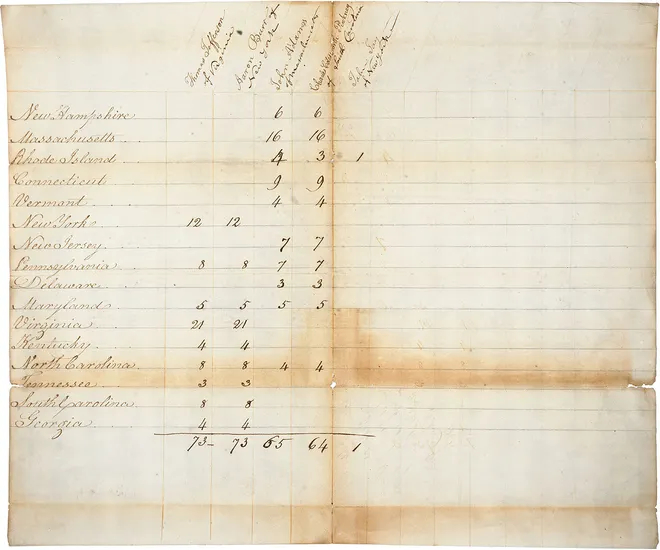
The election of 1800 was one of the most dramatic and consequential moments in American political history, culminating in a constitutional crisis that tested the young nation's democratic institutions. Thomas Jefferson and Aaron Burr, both Democratic-Republicans, tied in the Electoral College, throwing the decision to the U.S. House of Representatives. After 35 deadlocked ballots, Jefferson was finally elected as the third President of the United States on February 17, 1801, breaking the impasse on the 36th vote.
Background: A Bitterly Contested Election
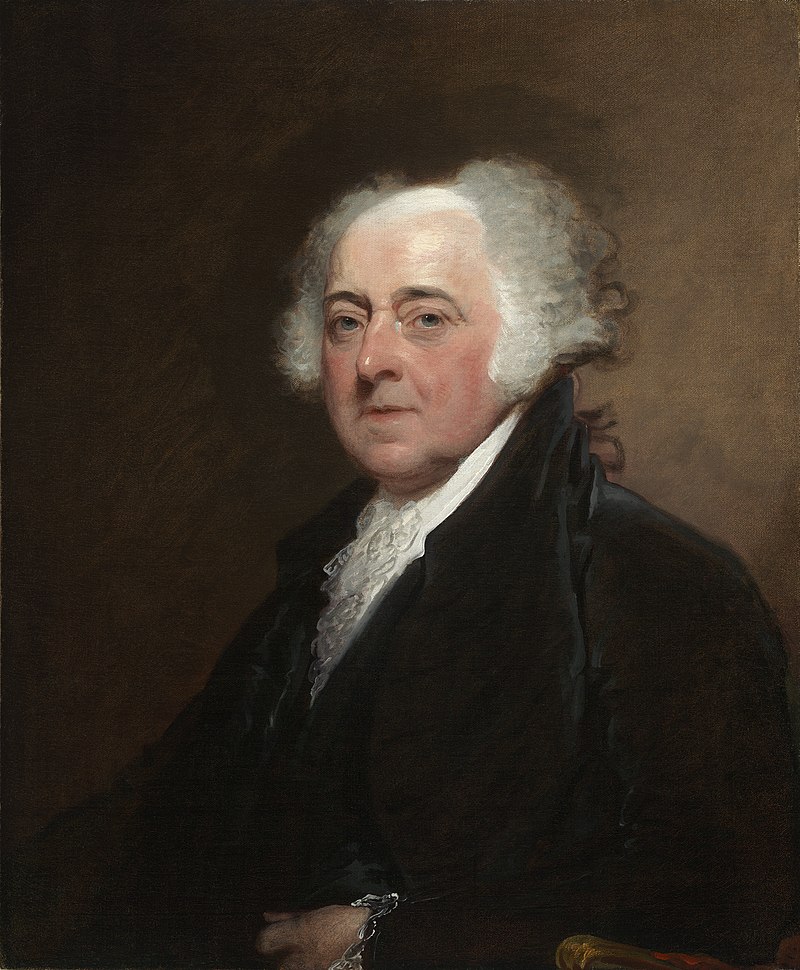
The election of 1800 was a rematch between the Federalist incumbent John Adams and his Democratic-Republican challenger, Thomas Jefferson. The campaign was fiercely partisan, with Federalists warning that Jefferson’s presidency would lead to chaos and atheism, while Democratic-Republicans accused Adams of monarchist tendencies.
Under the original rules of the Constitution, electors in the Electoral College cast two votes, without distinguishing between President and Vice President. The candidate with the most votes became President, and the runner-up became Vice President. Democratic-Republican electors intended for Jefferson to be President and Burr to be his Vice President, but they mistakenly gave both candidates an equal number of votes—73 each.
Since there was a tie, the decision fell to the House of Representatives, as required by the Constitution. However, at the time, the House was controlled by the outgoing Federalist Party, which had lost the election and now faced a difficult choice: break the tie in favor of their political rival, Jefferson, or try to maneuver for Burr, who was seen as more politically opportunistic and possibly pliable.
The House Deadlock: 35 Ballots of Stalemate
The House convened on February 11, 1801, to resolve the tie. Each state delegation had one vote, and a majority of nine out of sixteen states was required to decide the winner.
On the first ballot, eight state delegations voted for Jefferson, six for Burr, and two remained undecided.
For six days, the House continued voting—35 ballots in total—with the same result each time.
Federalists, particularly Alexander Hamilton, distrusted Jefferson but feared Burr even more, believing he was dangerously ambitious and unprincipled.
The Breakthrough: The 36th Ballot
The deadlock was finally broken on February 17, 1801, when James Bayard, a Federalist from Delaware, along with representatives from Maryland and Vermont, chose to abstain rather than support Burr. This allowed Jefferson to win the necessary nine-state majority on the 36th ballot.
Aftermath: The 12th Amendment and Political Shifts
This crisis exposed flaws in the electoral process, leading to the 12th Amendment in 1804, which required electors to cast separate votes for President and Vice President. Jefferson’s victory marked the first peaceful transfer of power between political parties in U.S. history, a crucial precedent for democratic stability. Burr, whose political maneuvering had alienated many, later fell from grace—most notably killing Alexander Hamilton in a duel in 1804.
Jefferson's presidency ushered in an era of Democratic-Republican dominance, while the Federalist Party gradually declined. The election of 1800 thus became known as the "Revolution of 1800", a pivotal moment in shaping American democracy.
#ThomasJefferson #ElectionOf1800 #USHistory #MomentsOfLife #MoofLife_Moment #MoofLife
Primary Reference
Presidential Terms and Tenure: Perspectives and Proposals for ...
Explore the Life Moments of
 AI Twin