Signs Refugee Act of 1980
10 min read
Updated By: History Editorial Network (HEN)
Published:
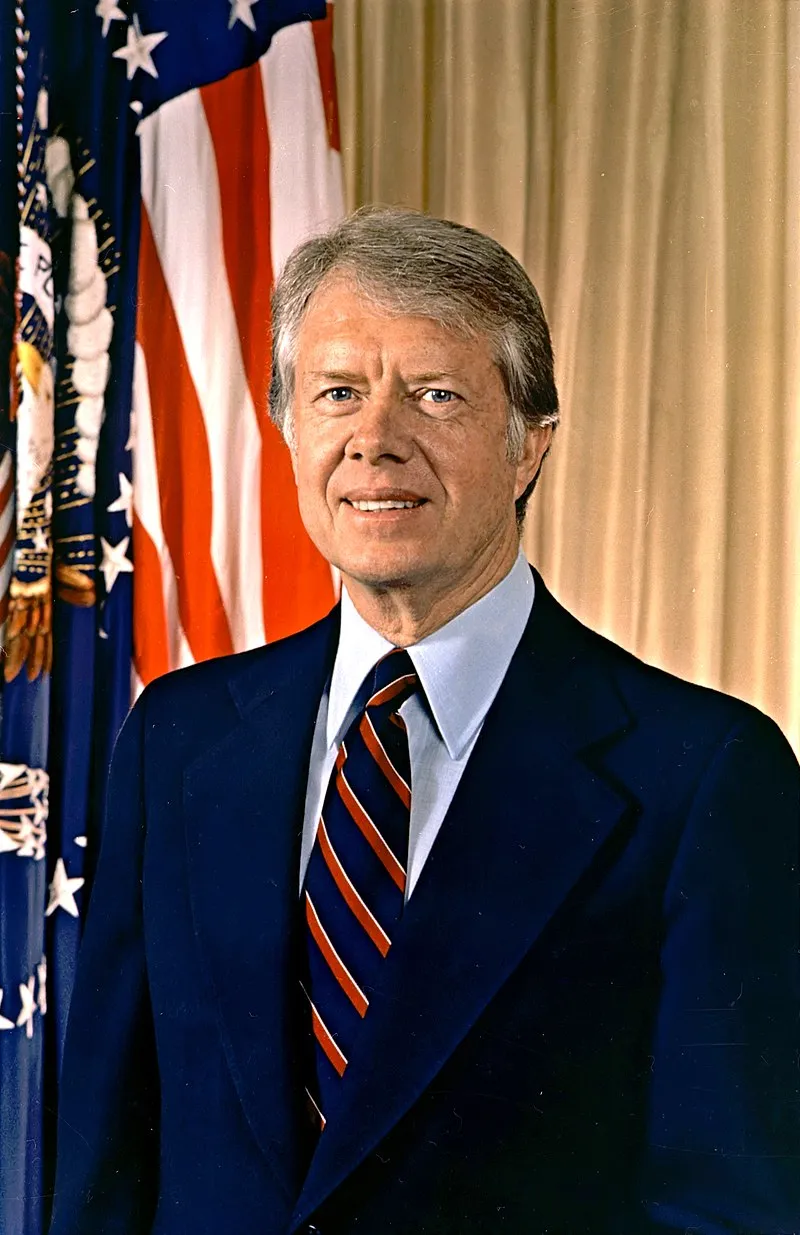
On March 18, 1980, President Jimmy Carter signed the Refugee Act of 1980 into law, a landmark piece of legislation that redefined U.S. refugee policy and aligned it with international humanitarian standards. The act came at a critical moment during the Cold War and in the aftermath of the Vietnam War, when global refugee crises were escalating, particularly in Southeast Asia, Cuba, and Africa. The Refugee Act of 1980 fundamentally reshaped how the U.S. handled refugees, setting a framework that continues to influence U.S. immigration policy today.
Background and Context
Prior to the Refugee Act of 1980, U.S. refugee policy was largely ad hoc, shaped more by Cold War political considerations than humanitarian needs. Earlier laws, like the Displaced Persons Act of 1948 and the Immigration and Nationality Act of 1965, focused on admitting refugees fleeing Communist regimes in Eastern Europe and Asia, rather than establishing a clear, consistent definition of who qualified as a refugee.
The need for a comprehensive refugee policy became increasingly apparent by the late 1970s. The fall of Saigon in 1975 and the subsequent communist takeover of Vietnam, Cambodia, and Laos led to a surge of Southeast Asian refugees, commonly referred to as "boat people." Additionally, the Cuban Mariel boatlift in 1980 brought tens of thousands of Cuban refugees to U.S. shores. This influx exposed the inadequacies of U.S. immigration policies and the lack of a formal refugee resettlement process.
The United Nations had already established a clear definition of refugees through the 1951 Refugee Convention and its 1967 Protocol, which defined a refugee as someone who is unable or unwilling to return to their country due to a well-founded fear of persecution based on race, religion, nationality, membership in a particular social group, or political opinion. However, U.S. law had not yet adopted this definition, leading to inconsistent and politically driven refugee admissions.
Key Provisions of the Refugee Act
The Refugee Act of 1980 introduced several crucial reforms:
Standardized Refugee Definition: For the first time, the U.S. adopted the United Nations' definition of a refugee. This was a significant shift from the previous practice of selecting refugees based on ideological grounds, particularly those fleeing communist or leftist regimes.
Annual Refugee Admissions Ceiling: The law established an annual ceiling of 50,000 refugees, although this number could be adjusted in response to emergency situations with presidential approval. This provided a structured and flexible approach to refugee admissions based on humanitarian needs rather than political motives.
Asylum Process: The act formalized the process for individuals already in the United States to apply for asylum, ensuring that people who arrived on U.S. soil could seek protection if they met the criteria for refugee status. This also marked the beginning of a more organized system of providing asylum to those who feared persecution.
Coordination of Refugee Assistance: The act created the Office of Refugee Resettlement (ORR) within the Department of Health and Human Services. This office was tasked with coordinating federal efforts to assist refugees, including funding for resettlement services like housing, job training, and language education.
Emergency Flexibility: In cases of significant humanitarian emergencies, such as mass migrations due to war or natural disasters, the president was granted the authority to increase the refugee cap and make rapid adjustments to respond to global crises.
Carter's Vision and Remarks
In his remarks at the signing ceremony, President Carter emphasized the humanitarian nature of the act, stating:
"This nation has always been a haven for the oppressed, and today, with the signing of this bill, we reaffirm our commitment to helping those who are forced to flee their homelands due to persecution and fear for their lives."
Carter framed the Refugee Act as part of America's long-standing tradition of offering refuge to those in need, from European immigrants fleeing religious persecution to those escaping conflict in more recent decades. He stressed the importance of the United States maintaining its role as a global leader in humanitarian efforts, and that the act would bring U.S. policy in line with its values of compassion and justice.
Immediate and Long-Term Impact
The Refugee Act of 1980 had immediate consequences, allowing the U.S. to respond more effectively to global crises. It helped facilitate the resettlement of Southeast Asian refugees and those fleeing communism in Eastern Europe, Latin America, and other parts of the world. Importantly, it depoliticized refugee admissions by shifting the focus from Cold War considerations to a broader, non-discriminatory humanitarian framework.
Over the decades, the Refugee Act has served as the foundation for U.S. refugee and asylum policy. It paved the way for the resettlement of millions of people from regions affected by war, persecution, and political unrest. This includes refugees from Bosnia, Somalia, Afghanistan, Iraq, and Syria, among others.
The act also established a formal and fair asylum system within the U.S., allowing individuals to seek protection from persecution even if they arrived at U.S. borders or already resided within the country. The structured framework for refugee admissions and resettlement created by the Refugee Act has enabled the U.S. to respond to evolving global refugee crises, albeit not without political challenges and debates.
#RefugeeAct #JimmyCarter #USImmigration #HumanitarianPolicy #USHistory #RefugeeRights #Asylum #GlobalRefugeeCrisis #MomentsOfLife #MoofLife_Moment #MoofLife
Primary Reference
Refugee Act of 1980 Statement on Signing S. 643 Into Law. | The ...
Explore the Life Moments of
 AI Twin