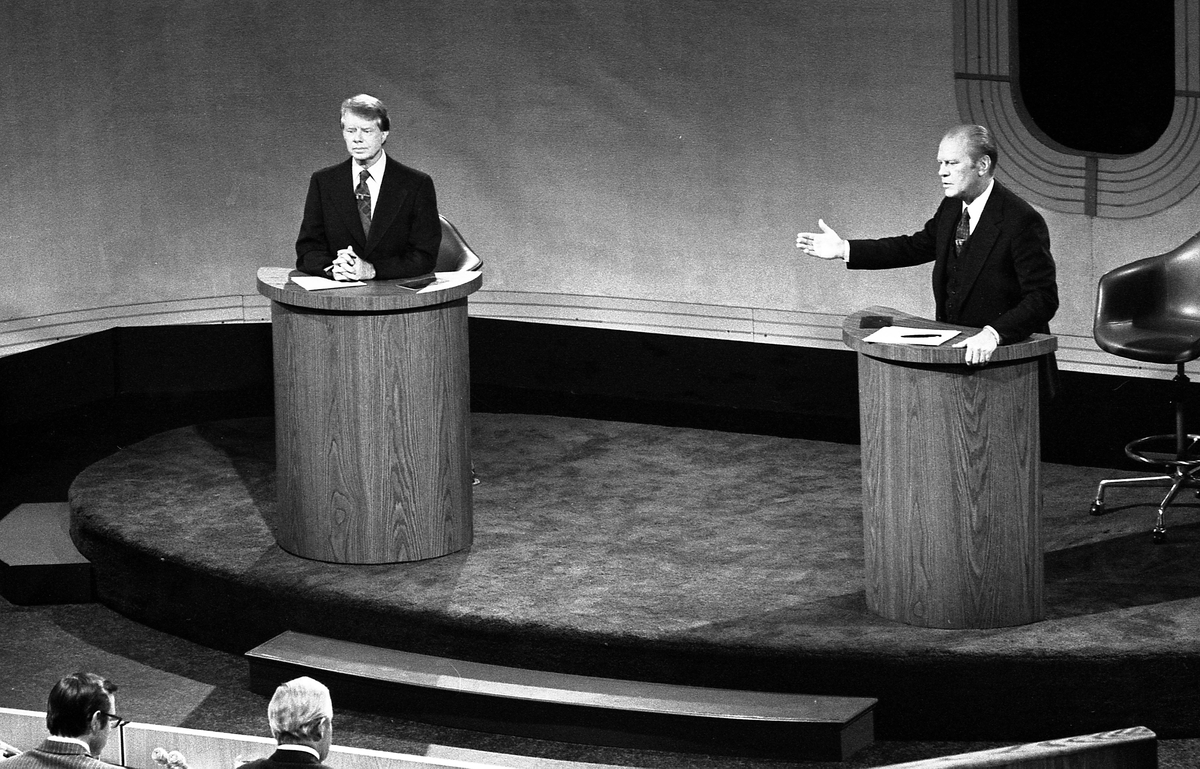
Presidential Debate between Ford and Carter
Political
Voter Engagement
6 min read
Updated By: History Editorial Network (HEN)
Published:
The third debate between Gerald Ford and Jimmy Carter marked a pivotal juncture in American political discourse. Gerald Ford, the incumbent president, faced off against his challenger, former Georgia Governor Jimmy Carter. The debate occurred during a period marked by economic struggles, including high inflation and unemployment. Foreign policy and domestic issues were significant topics of contention.
Ford, who had ascended to the presidency following Richard Nixon's resignation, sought to defend his record, emphasizing his administration's efforts to stabilize the economy and restore public trust in government. Carter, a relatively unknown figure on the national stage, presented himself as a Washington outsider intent on bringing ethical reform and fresh perspectives to the White House.
Key issues discussed included the state of the economy, U.S.-Soviet relations, and energy policies. Ford's performance was closely scrutinized, particularly after his controversial statement in an earlier debate that Eastern Europe was not under Soviet domination—a gaffe that likely impacted his credibility. In this third encounter, he needed to reassure the public of his competence and vision.
Carter's strategy focused on portraying himself as a champion of the average American, addressing economic difficulties and high unemployment rates. He pledged to reduce government inefficiency and to prioritize human rights in foreign policy. Statistical evidence played a crucial role, with both candidates citing figures to support their arguments. Ford highlighted statistics indicating a reduction in inflation rates as a positive outcome of his policies, while Carter pointed to the increasing unemployment rate as a failure of the current administration.
This debate allowed television audiences to connect with the candidates on critical issues impacting their lives. It played a crucial role in shaping public opinion and left a lasting impression on the electorate. Voter turnout was significant in the subsequent election, reflecting the heightened public engagement spurred by these debates.
In terms of impact, the debate underscored the importance of media in political campaigns and the ability of televised debates to influence voter perception. It demonstrated the significance of clear communication and factual accuracy in addressing national concerns.
#MoofLife #PoliticalDebate #ElectionImpact #FordVsCarter #VoterEngagement #PresidentialElection #EconomicPolicy #ForeignPolicy
Primary Reference
CPD: October 22, 1976 Debate Transcript
Explore the Life Moments of
 AI Twin