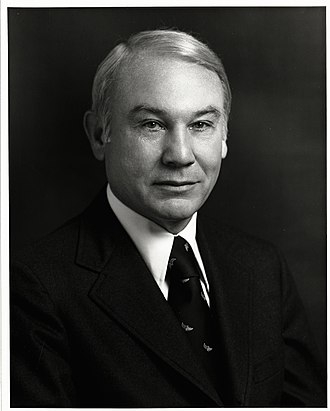
Nomination of G. William Miller as Federal Reserve Chairman
Economic Policy
Federal Reserve
5 min read
Updated By: History Editorial Network (HEN)
Published:
In a move that aimed to steer the country's fiscal policy in a new direction, President Jimmy Carter announced the nomination of G. William Miller as Chairman of the Federal Reserve. This decision marked a departure from tradition, as Miller was the first person without a formal economics background to be appointed to this pivotal role. Prior to his nomination, Miller served as CEO of Textron, a diversified manufacturing company, where he was noted for his management acumen and ability to navigate complex financial landscapes.
The backdrop of this nomination was a turbulent economic period characterized by rising inflation and sluggish growth, termed as 'stagflation.' The Carter administration faced significant challenges, including high unemployment rates and an energy crisis that strained the country's resources. Gerald Ford's appointee, Arthur Burns, had previously led the Federal Reserve but had been criticized for failing to control inflation effectively.
Miller's selection was part of Carter's broader strategy to employ innovative approaches to long-standing economic issues. Supporters of the nomination highlighted Miller's pragmatic business experience and leadership qualities. Critics, however, expressed concern over his lack of academic training in economics, questioning whether his background was sufficient to tackle the intricacies of monetary policy.
Miller's tenure at the Federal Reserve was characterized by significant policy shifts. He opted for a more accommodative monetary policy initially, hoping to stimulate economic growth. However, as inflationary pressures mounted, tougher measures became necessary. The era underscored the complexity of balancing economic growth with price stability.
The nomination of Miller by President Carter represented a bold choice that underscored the administration’s willingness to defy conventional norms in addressing economic challenges. It punctuated a period of experimental leadership within the Federal Reserve, which had lasting implications on its future policies. The legacy of Miller's leadership remains a point of study for economic historians, offering insights into the dynamics between Federal Reserve policy decisions and broader economic health.
#EconomicPolicy #FederalReserve #JimmyCarter #Inflation #FiscalLeadership #MoofLife
Primary Reference
Jimmy Carter Event Timeline | The American Presidency Project
Explore the Life Moments of
 AI Twin