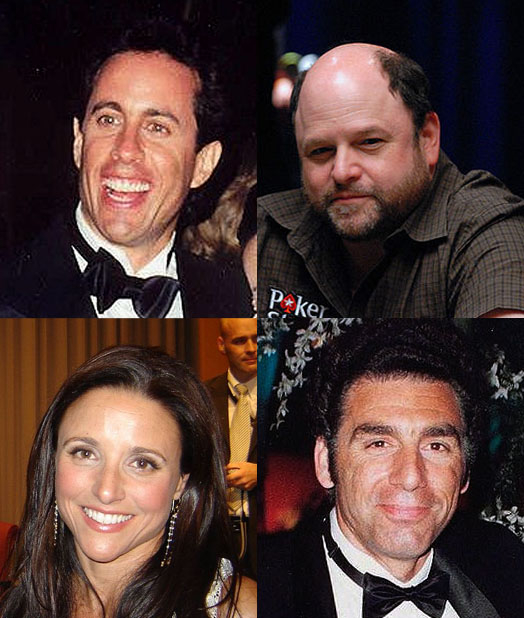
Creation of The Seinfeld Chronicles
United States
Television
Comedy
Entertainment
6 min read
Updated By: History Editorial Network (HEN)
Published:
Updated:
In November 1988, Jerry Seinfeld and Larry David developed the initial concept for what would later become The Seinfeld Chronicles, the sitcom eventually renamed Seinfeld. According to accounts from Seinfeld, David, and producers connected to the show, the idea emerged during a late-night visit to a Korean deli in Manhattan after the two comedians began joking about ordinary products and casual observations inside the store.
During the conversation, Larry David reportedly remarked, “This is the kind of talk you never see on TV,” a statement that became central to the show’s creative direction. Rather than building stories around dramatic events or traditional sitcom premises, Seinfeld and David became interested in creating comedy based on small, everyday conversations and social observations drawn directly from ordinary life.
The project moved forward after Seinfeld’s manager, George Shapiro, encouraged NBC executives to meet with Seinfeld about developing a television concept. Initially, Seinfeld and David considered creating a 90-minute special focused on how comedians gather material for stand-up routines. However, the concept gradually evolved into a half-hour sitcom format centered around conversational humor and daily experiences.
The following night, Seinfeld and David reportedly continued planning the project at Manhattan’s Westway Diner, where they refined the idea into what Seinfeld later summarized simply as “Two guys talking.” The early concept involved Jerry Seinfeld playing a fictionalized version of himself navigating everyday situations with friends and acquaintances in New York City.
During these early brainstorming sessions, Larry David also proposed including an eccentric neighbor character inspired by his real-life friend Kenny Kramer. That concept eventually evolved into Cosmo Kramer, portrayed by Michael Richards in the final series. Additional character dynamics drew heavily from the personalities, frustrations, and conversational habits of Seinfeld and David themselves.
As development continued through late 1988 and early 1989, the writing team produced a pilot script titled The Seinfeld Chronicles. Other possible titles reportedly considered included Stand Up and The Jerry Seinfeld Show before NBC settled on the original pilot title. The script eventually became the basis for the pilot episode “Good News, Bad News,” which aired on NBC on 05/07/1989.
At the time, the idea of building a sitcom around seemingly insignificant conversations and social minutiae was considered unusual within network television. Most sitcoms of the era focused on family structures, workplace situations, or broader comedic premises. Seinfeld and David’s approach instead emphasized observational realism, awkward interactions, and trivial everyday frustrations.
#Seinfeld #JerrySeinfeld #LarryDavid #NBC #SitcomHistory #TelevisionComedy #Kramer
#mooflife
#MomentOfLife
#Seinfeld
#LarryDavid
#Nbc
#TelevisionHistory
#Sitcoms
Primary Reference
Jerry Seinfeld

Explore the Life Moments of
 AI Twin