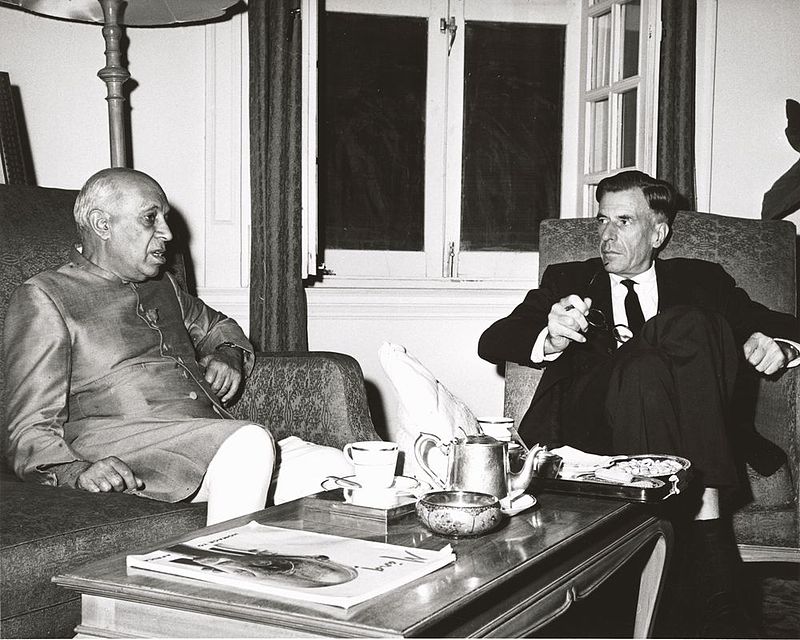
India's Appeal to US: Strengthen Defenses, Manage Pakistan, Counter Chinese Incursions
India
Political
Global Trade
4 min read
Updated By: History Editorial Network (HEN)
Published:
During a critical period in the early 1960s, India was engaged in a military conflict with China. Indian Prime Minister Jawaharlal Nehru, recognizing the immediate need to strengthen India’s defenses, reached out to the United States for support. The Chinese forces had launched a series of incursions along the disputed Himalayan border, overwhelming Indian defenses. Nehru's government was acutely aware of the challenges posed by the inadequately equipped Indian military.
Concurrently, Nehru was concerned about Pakistan's potential involvement in the conflict. Given the hostile relations between India and Pakistan since the partition, there was a palpable fear that Pakistan might exploit India's vulnerable moment. Ensuring Pakistan's neutrality became a strategic priority to prevent a two-front war.
Nehru's appeal to the United States was multifaceted. He sought military aid, including defensive equipment and supplies, to resist further advances by Chinese troops. Additionally, he hoped that U.S. diplomatic influence could ensure that Pakistan remained neutral, thereby allowing India to concentrate its efforts on the Chinese front.
The U.S. response included the provision of military equipment and supplies, which helped bolster Indian defenses. Diplomatic efforts also took place to manage Pakistan's stance during this period of conflict. This instance highlighted the geopolitical complexities in South Asia, where global powers like the U.S. played pivotal roles in regional security dynamics.
This request for support from the U.S. by Nehru illustrates the strategic calculations made by India amid external threats. It underscores the interconnected nature of international relations and military strategy during a period marked by Cold War rivalries.
#MoofLife #Nehru #IndiaDefense #USIndiaRelations #ChinaConflict #PakistanNeutrality #ColdWarAsia
Primary Reference
Timeline: U.S.-India Relations
Explore the Life Moments of
 AI Twin