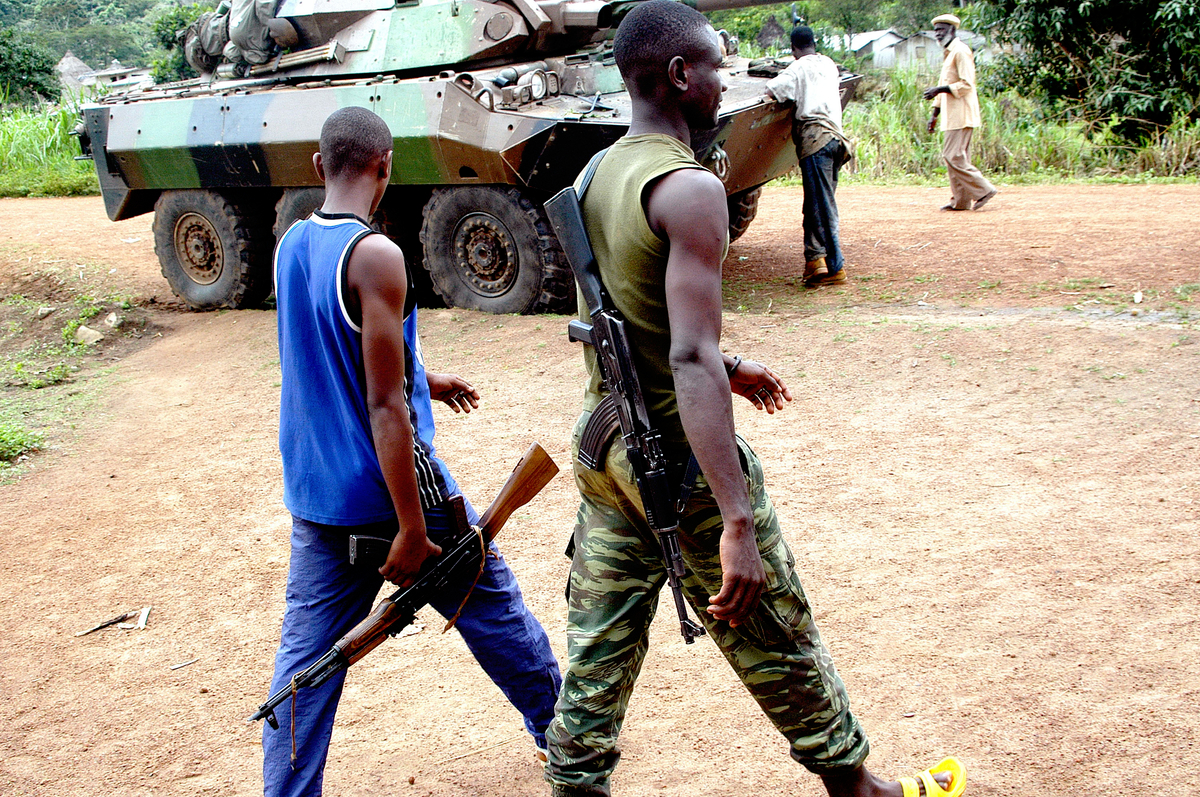
Troops Withdraw in Reconciliation Effort
Ivory Coast
Political
5 min read
Updated By: History Editorial Network (HEN)
Published:
The event marked a pivotal transition for Ivory Coast, a nation historically plagued by political instability and civil strife. The Ivory Coast Civil War, which began in 2002, created a deep divide between the government-controlled South and the rebel-held North. Amid ongoing international pressure and mediation, a peace agreement eventually laid the groundwork for reintegration and stabilization efforts.
During the process, both rebel and government soldiers withdrew from their front-line positions. This withdrawal was a critical element in the broader peace process aimed at reunifying the country. The action was facilitated by the involvement of international peacekeeping forces, particularly those from the United Nations Operation in Côte d'Ivoire (UNOCI), which played a supervisory role to ensure compliance and build trust between the conflicting parties.
Statistics indicated significant strides. The UNOCI reported a drop in violent incidents and an overall reduction in armed confrontations, suggesting that the withdrawal had an immediate positive impact on national security and public safety. The agreement included provisions for disarmament, demobilization, and reintegration (DDR) of combatants into civilian life, which was essential for long-term peace.
Economically, the withdrawal allowed for the reopening of key trade routes and the restoration of commerce between the North and South. Humanitarian organizations noted improvements in the distribution of aid and resources, previously hindered by conflict. Socially, the withdrawal was a step toward reconciliation, enabling displaced populations to return to their homes and communities to begin rebuilding.
Political observers highlighted this moment as a benchmark in Ivory Coast's peace process, underscoring the importance of diplomatic engagement and international support in resolving internal conflicts. The withdrawal from front-line positions served as a testament to the progress achievable through concerted peace efforts, reflecting a shared commitment to national unity.
While challenges remained, the impact of the withdrawal was a positive indicator of Ivory Coast's potential to overcome divisive forces and achieve lasting peace and stability.
#IvoryCoast #PeaceProcess #ConflictResolution #UNOCI #DDR #TradeRoutes #EconomicRecovery #Reconciliation #MoofLife
Primary Reference
Cote d'Ivoire - The World Factbook

Explore the Life Moments of
 AI Twin