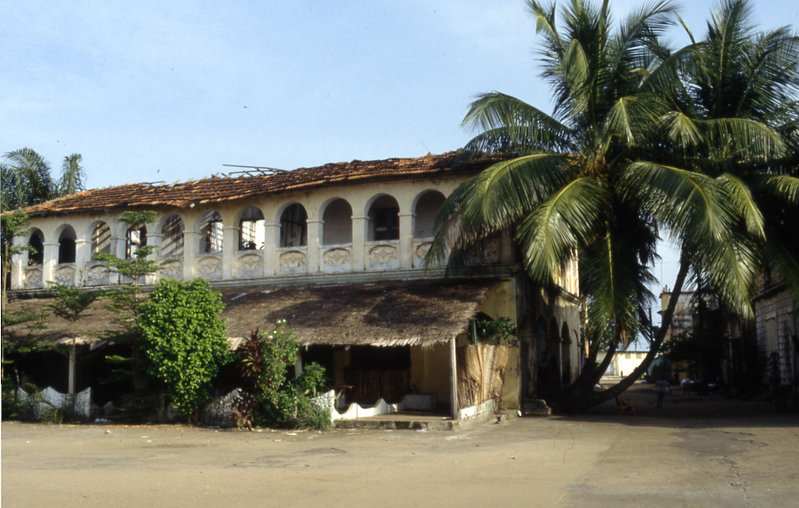
Establishment of Grand-Bassam as the capital of French West Africa
Ivory Coast
Political
Economic Downturn
6 min read
Updated By: History Editorial Network (HEN)
Published:
The French establishment of Grand-Bassam as the capital of French West Africa was a pivotal event in the region's history, significantly influencing socio-political and economic structures. The location of Grand-Bassam was strategically selected due to its positioning along the Gulf of Guinea, offering a critical gateway for maritime activities and trade. This port town became an administrative hub for the French colonial empire in West Africa, owing to its accessible route for maritime navigation and trade.
Prior to French colonial ambitions, Grand-Bassam was predominantly inhabited by indigenous communities, primarily the N'zima people. The French interest in the region was largely motivated by prospects of commercial expansion and the necessity to exert control over trading routes and indigenous communities. The establishment of a capital here allowed for the execution of administrative orders, management of resources, and collection of taxes, thus consolidating French power in Ivory Coast and beyond.
The impact on local communities was profound. The imposition of French administrative frameworks disrupted established social systems and economic practices. Indigenous political structures faced constraints, and traditional authorities were systematically subordinated to colonial governance. Furthermore, the development of European-style infrastructure, such as governmental buildings, schools, and health services in Grand-Bassam, marked the beginning of significant socio-cultural transformations. These changes played both positive and negative roles; while they introduced modernization in certain sectors, they also marginalized indigenous methods and cultures.
In terms of demographic changes, Grand-Bassam experienced an influx of European settlers, traders, and missionaries, which facilitated cultural exchanges but also fostered social stratification. The forced labor policies and imposition of foreign taxation created economic strains on local populations, igniting resistance in various forms over time.
Statistically, the establishment of Grand-Bassam as the capital led to measurable growth in trade volume and administrative efficiency within French West Africa, bolstering colonial ambitions not only in Ivory Coast but across the broader region. It laid a foundation for subsequent infrastructural development and integration of West African territories under French colonial rule.
The subsequent evolution of Grand-Bassam into a cultural and historical landmark in contemporary Ivory Coast underscores its enduring legacy as a center for colonial administration, reflecting broader themes of domination, resistance, and adaptation within colonial history.
#ColonialHistory #IvoryCoast #GrandBassam #FrenchWestAfrica #MoofLife
Primary Reference
Ivory Coast - Wikipedia

Explore the Life Moments of
 AI Twin