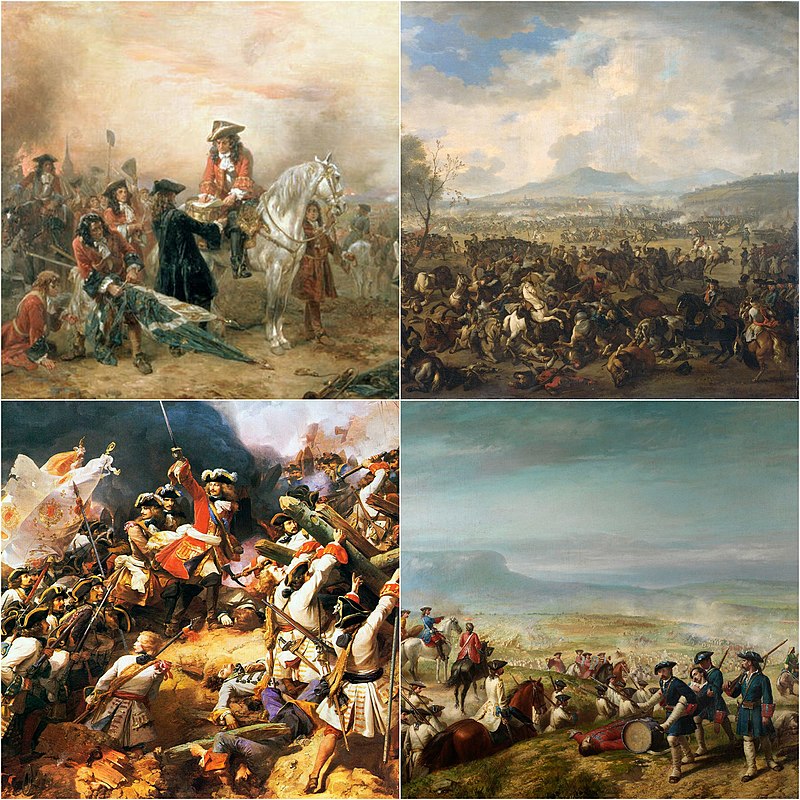
War of Spanish Succession - Conflict over Spanish throne succession triggers major European war.
Italy
Political
7 min read
Updated By: History Editorial Network (HEN)
Published:
On May 15, 1701, a pivotal moment unfolded in European history with the commencement of the War of Spanish Succession. This conflict, stretching across much of Europe and beyond, was triggered by the death of the childless Charles II of Spain in November 1700. His demise left a power vacuum that various European powers were eager to fill, fearing the balance of power on the continent would tilt dangerously if any single faction gained control of the vast Spanish Empire, which included territories in Europe, the Americas, Asia, and Africa.
Origins and Causes
The roots of the war lay in the rival claims to the Spanish throne. Charles II had named Philip, Duke of Anjou and grandson of Louis XIV of France, as his successor. However, this succession was unacceptable to other European powers, particularly England, the Dutch Republic, and Austria, who feared the increasing power of France under Louis XIV. The prospect of the Spanish and French crowns uniting under a single ruler threatened to disrupt the delicate balance of power established by earlier treaties such as the Treaty of the Pyrenees and the Treaty of Westphalia.
Major Powers and Alliances
The conflict saw the formation of two major coalitions. The first was led by France, supporting Philip V’s claim to the throne, while the other, known as the Grand Alliance, included major European powers like England (later Great Britain), the Dutch Republic, Austria, and eventually Prussia and Portugal. Each coalition aimed not only to resolve the issue of succession but also to assert dominance over European trade routes and colonies worldwide.
Key Battles and Events
The war was marked by numerous significant battles and sieges, including those at Blenheim (1704), Ramillies (1706), and Turin (1706). The Battle of Blenheim, in particular, was a crucial turning point, delivered by the Duke of Marlborough and Prince Eugene of Savoy, which dealt a severe blow to French ambitions. The war also involved complex naval engagements, as control of trade routes was crucial.
Conclusion and Treaty
The War of Spanish Succession concluded with the Treaty of Utrecht in 1713, followed by the Treaties of Rastatt and Baden in 1714. These treaties reshaped the European political landscape significantly. Philip V remained king of Spain but was required to renounce any claim to the French throne, thereby preventing the union of the two kingdoms. Austria received the Spanish Netherlands and parts of Italy, while England gained significant territories and trading rights, enhancing its naval and colonial supremacy.
Legacy
The War of Spanish Succession set the stage for future European conflicts by altering alliances and territories. It also marked the rise of Britain as a preeminent global naval power and heralded a period of increased colonial and mercantile competition.
This event not only encapsulated a struggle for royal succession but also reflected the broader contest for European dominance and control of global trade, making it a defining moment in the history of early modern Europe.
#WarOfSpanishSuccession #EuropeanHistory #1701 #MomentsOfLife #MoofLife_Moment #MoofLife
Primary Reference
War of the Spanish Succession | Causes, Definition, Combatants ...

Explore the Life Moments of
 AI Twin