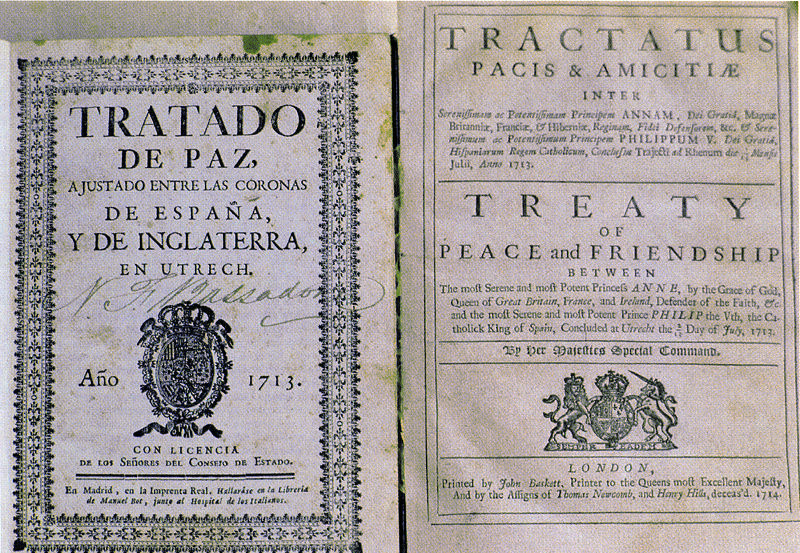
Treaty of Utrecht ends Spanish Succession War, benefits Austria and England with land gains.
Italy
Diplomacy
4 min read
Updated By: History Editorial Network (HEN)
Published:
In April 1713, the Treaty of Utrecht concluded the War of Spanish Succession, a major conflict that had involved several European powers. The war had started due to the death of the Spanish king without an heir, leading to a struggle over who would succeed him. The treaty was signed by various countries, including Spain, France, Great Britain, and the Dutch Republic. One of the key outcomes of the Treaty of Utrecht was the territorial gains for Austria and England. Austria gained control of much of the Spanish Netherlands, Naples, Milan, and Sardinia, while England secured Gibraltar and Minorca from Spain. The Treaty of Utrecht marked a significant shift in the balance of power in Europe. It helped bring an end to the conflict and establish a new order that would shape European politics for years to come. The agreement also aimed to prevent one single power from dominating the region, leading to a more stable political environment. The treaty had far-reaching consequences for the countries involved. Spain had to cede several territories and accept the Bourbon dynasty as its rulers. France made concessions to Britain and the Dutch Republic, weakening its position in Europe. Austria emerged as a major player with significant territorial gains. Overall, the Treaty of Utrecht was a pivotal moment in European history, reshaping the political landscape and setting the stage for future conflicts and alliances. It marked the end of a long and bloody war, bringing a period of relative stability to the region. #TreatyofUtrecht #WarofSpanishSuccession #EuropeanHistory #TerritorialGains #Diplomacy #Austria #England
Primary Reference
Peace of Utrecht - Wikipedia

Explore the Life Moments of
 AI Twin